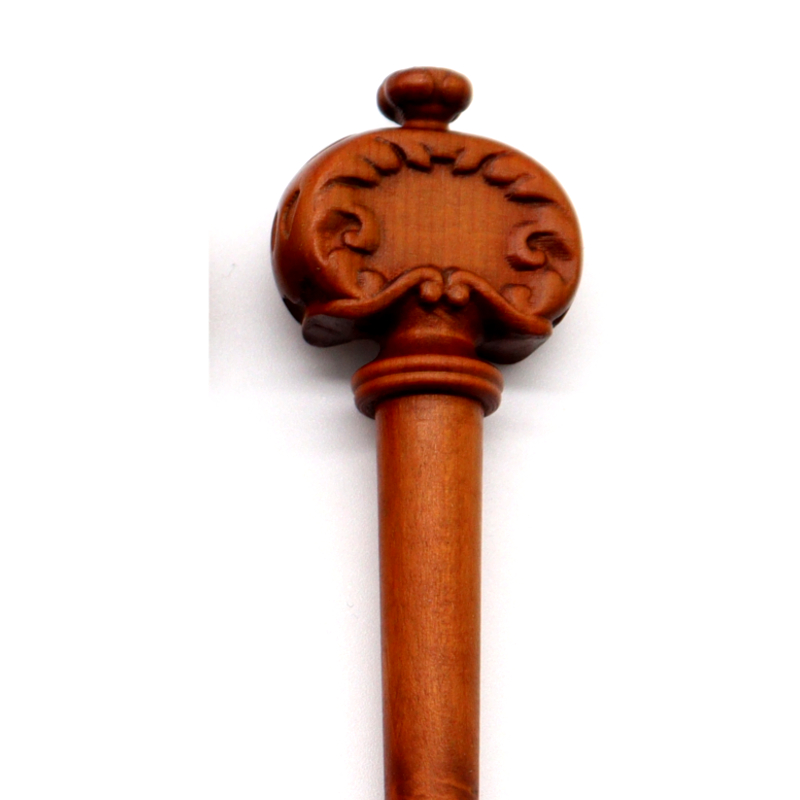

Why Violin Pegs Slip
A peg that immediately slips back after tuning takes away the instrument’s sense of stability. When violin pegs are slipping, it is more than a minor inconvenience: pitch becomes unreliable, tuning requires more concentration, and the beginning of a rehearsal or concert loses its ease.
The good news is that the cause can often be identified quite clearly. The key question is whether the problem is caused by a temporary change in friction or by a poor fit that should be checked by a violin maker.
How a Violin Peg Holds the String
A tuning peg does not hold the string with a thread. It works through precisely controlled friction.
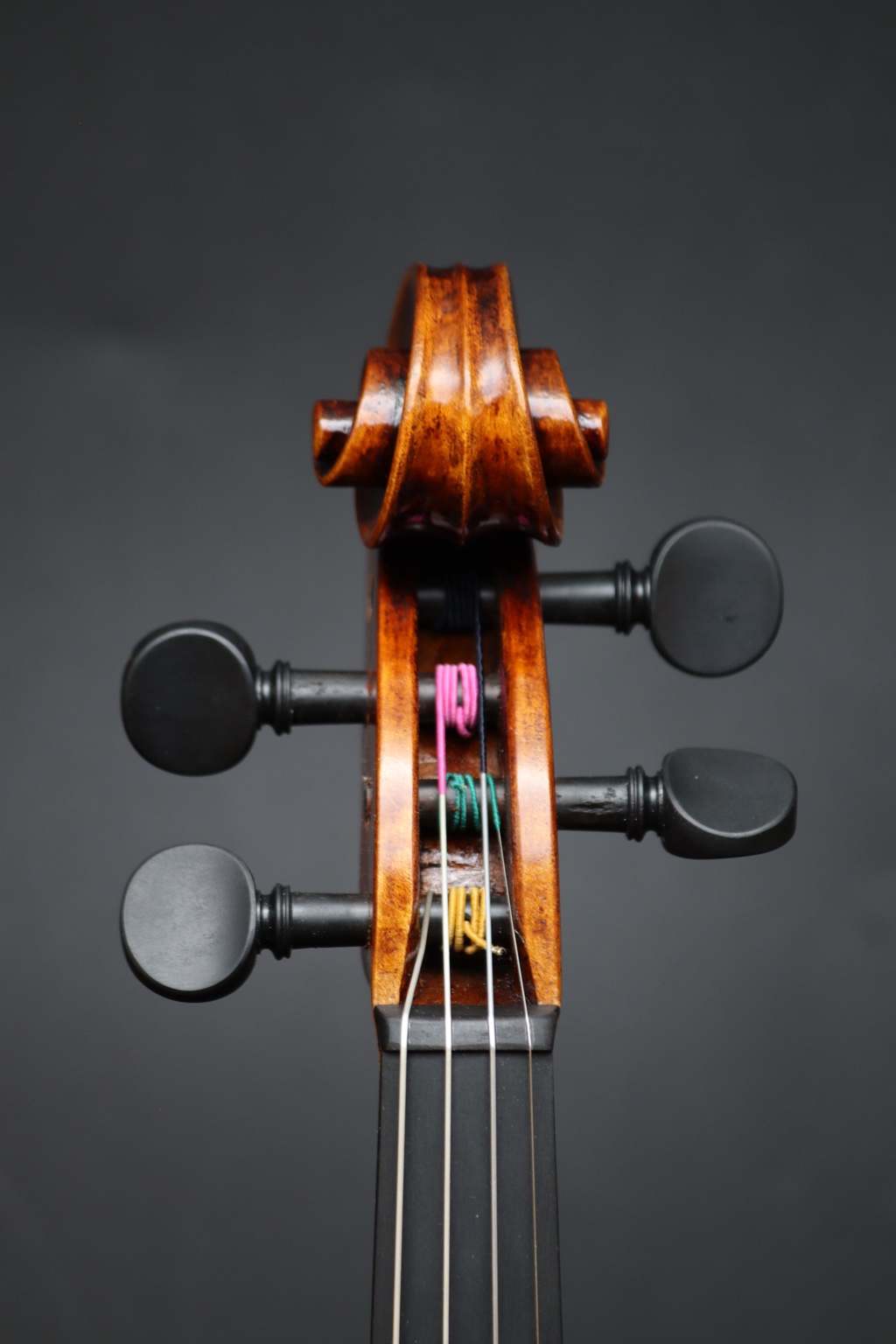
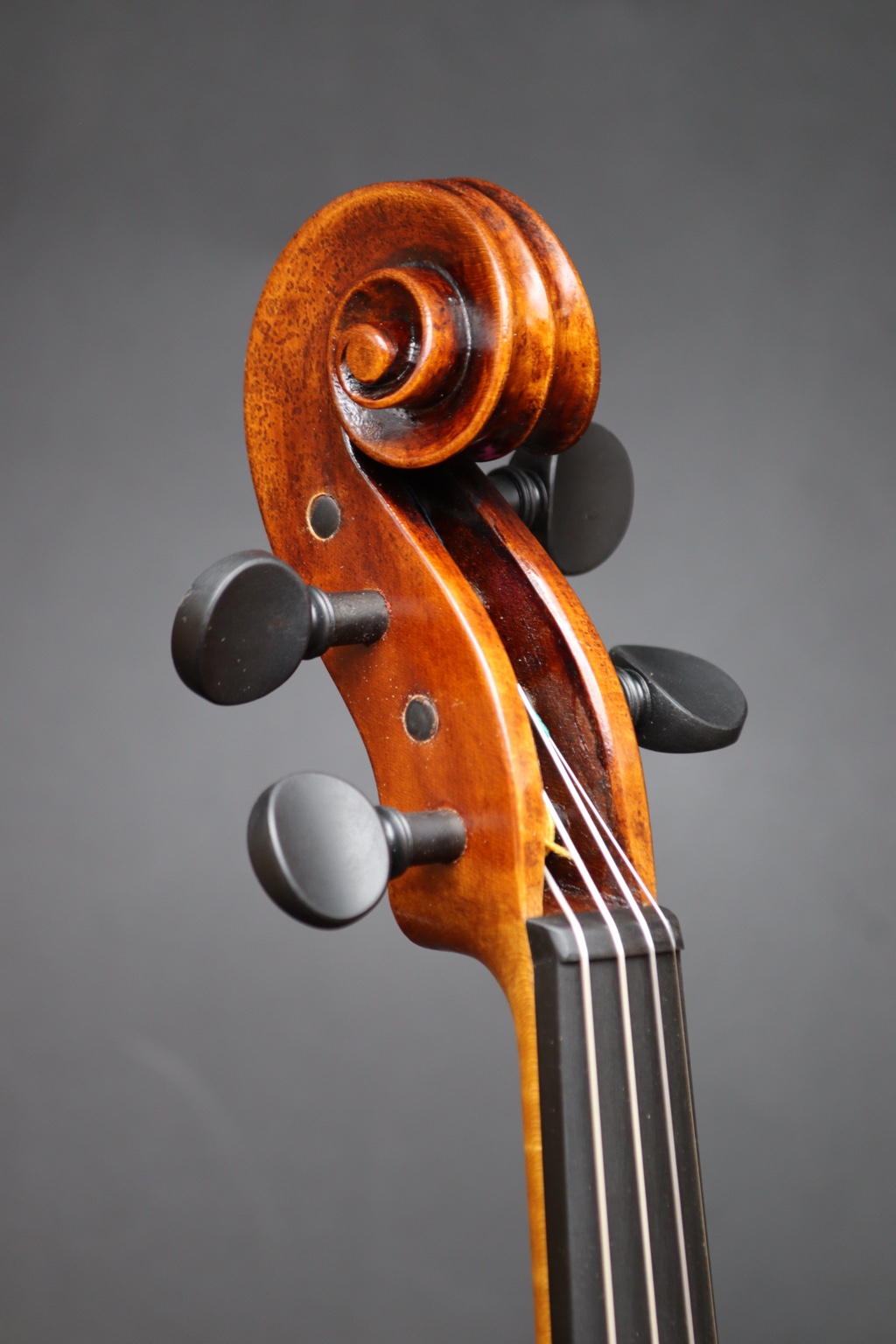
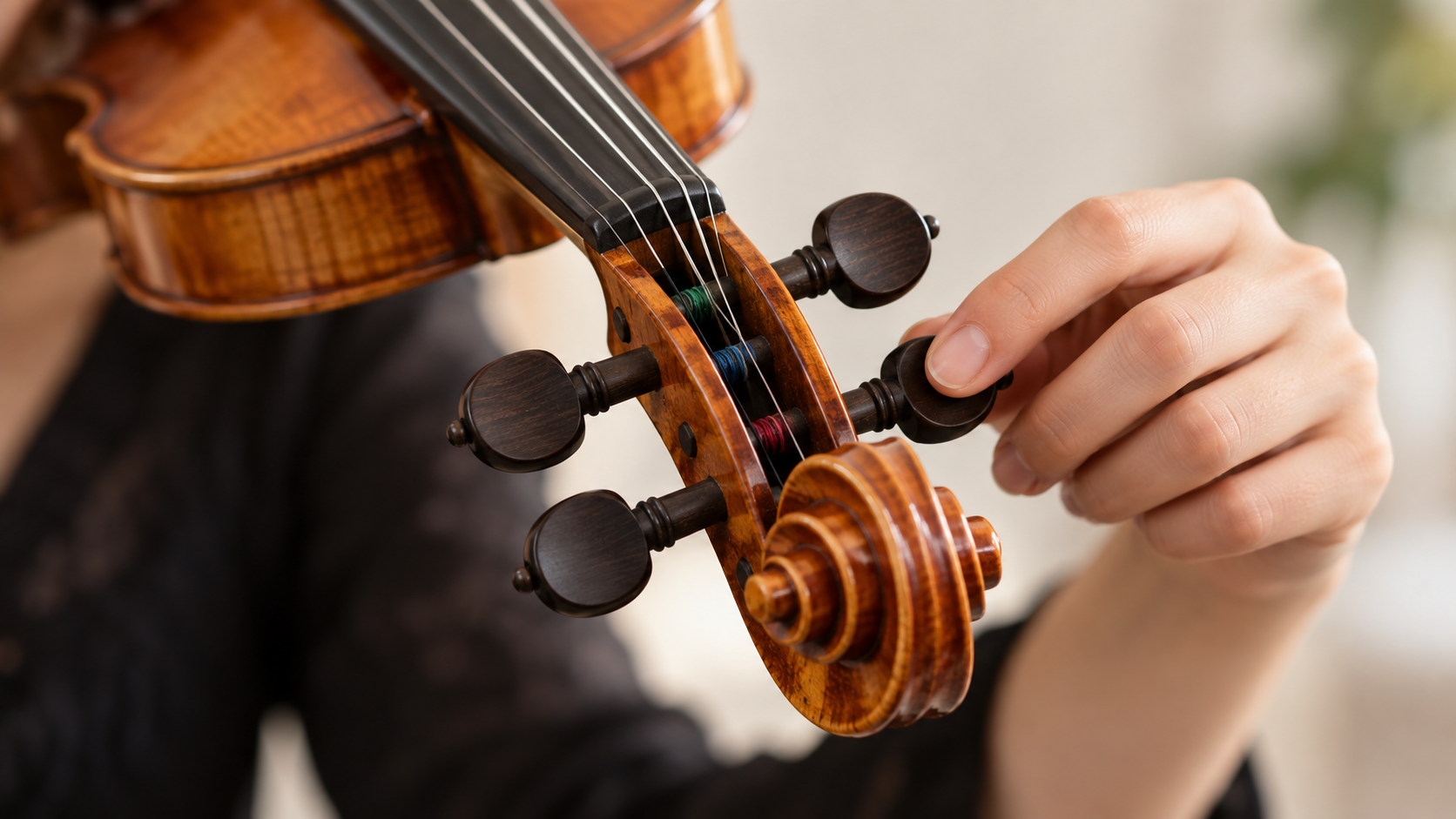
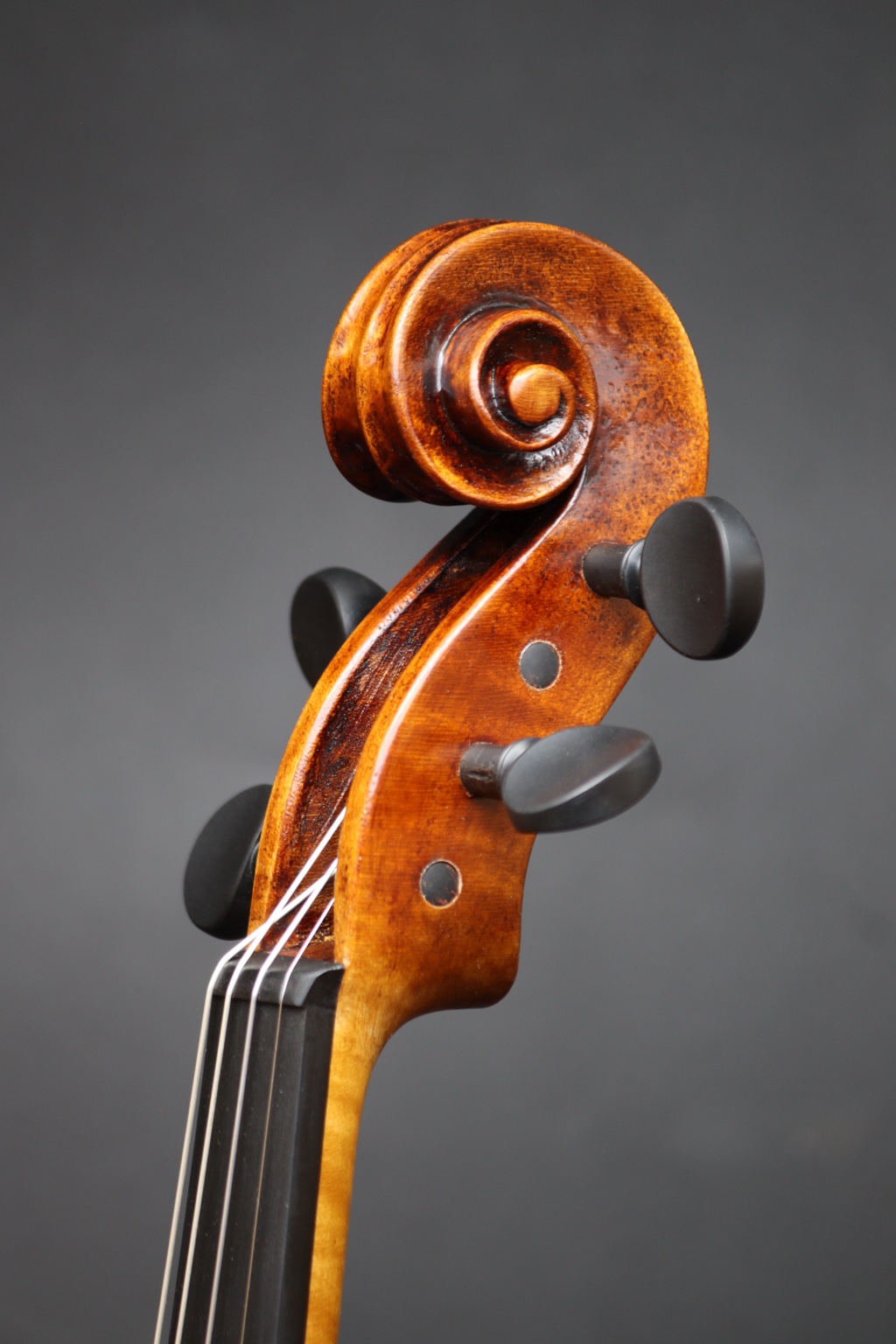
The tapered peg shaft sits inside a matching tapered hole in the pegbox. While tuning, the peg is turned with gentle inward pressure. Only when both contact surfaces fit evenly and with the correct geometry does the peg develop enough friction to hold the string securely while still allowing precise tuning adjustments.
This balance can react to very small changes. Dry heated air may cause the wood to shrink, while high humidity can make it swell. Temperature changes after transport, dust inside the peg hole or residues from unsuitable care products can also affect friction.
Many musicians notice this particularly during autumn and winter, when an instrument that previously tuned perfectly may suddenly need frequent adjustment.
The Peg Itself Is Not Always the Problem
A slipping peg does not automatically mean that the peg is damaged or badly fitted.
A new string stretches during the first few days. Uneven winding around the peg can create sideways tension, and the way the string passes through the nut can also influence tuning stability.
Careful observation can therefore prevent unnecessary work.
The Feel While Tuning Reveals a Lot
If the peg slips back immediately even though gentle inward pressure is applied while turning, there is usually not enough friction.
If the peg moves only in sudden jumps and still fails to hold reliably, dirty or uneven contact surfaces may be the cause.
A peg that grips in one position but slips in another should be checked professionally. In this case, the taper of the shaft or the shape of the peg hole may no longer be even.
Check the String Winding
The way the string is wound around the peg also provides useful information.
If the winding presses hard against the wall of the pegbox or crosses over itself, it can create undesirable sideways tension.
The string should wind neatly and evenly without interfering with neighbouring windings. This improves tuning stability and also reduces unnecessary stress on the pegbox.
Check First, Treat Second
Before using any products, it is worth looking carefully at the actual problem.
Do not continue tuning with excessive force if the peg keeps slipping. Heavy pressure or frantic retuning can make the situation worse and may place unnecessary stress on delicate or historical instruments.
First check the string:
- Has the string just been installed?
- Does it run cleanly from the nut to the peg?
- Are the windings arranged neatly next to each other?
- Is the winding pressing unnecessarily against the pegbox wall?
With a new string, it is normal for the pitch to settle several times. Tune in small steps and check the pitch again after a short period.
Climate and Humidity
Room climate also plays an important role in the behaviour of violin pegs.
An instrument should not be stored permanently next to a radiator, in direct sunlight or inside a cold vehicle. A stable environment with moderate humidity is preferable.
Where seasonal fluctuations are strong, a suitable case humidifier can be useful. It cannot correct a poor peg fit, but it can help prevent the wood from constantly reacting to extreme changes.
Using Peg Compound Correctly
For slightly slipping pegs that otherwise fit properly, a high-quality peg compound can help.
It is designed to influence friction in a controlled way while preserving a smooth turning action.
It should be used very sparingly. The string is loosened, the peg is carefully removed, and only a very small amount is applied to the visible contact areas of the shaft. The peg is then reinserted and turned several times before the string is wound on again.
Less is usually more.
Too much compound can make the peg feel sticky or imprecise and may build up inside the peg hole.
Avoid Improvised Home Remedies
Improvised solutions such as oil, wax or glue should not be used.
Highly abrasive materials such as chalk or rosin may increase friction temporarily, but they can make the peg feel harsh and difficult to control.
Glue should never be used on a tuning peg. It can damage the instrument and make later professional adjustment considerably more difficult.
A slipping peg does not simply need as much friction as possible. What it needs is a clean, even and accurately fitting contact surface.
When Should a Violin Maker Check the Pegs?
Repeated slipping despite appropriate care is a good reason to visit a workshop.
A violin maker can check the fit of the pegs, carefully reshape the shaft if necessary, or correct the peg hole and fit the peg properly.
This work requires experience because the axis, taper, pegbox wall thickness and final position of the peg head all need to work together.
Especially with valuable, old or acoustically sensitive instruments, peg fitting should not become a do-it-yourself project.
A reamer or peg shaper can remove too much wood very quickly. Once a peg hole becomes too large, stronger pressure will not solve the problem permanently and a much more complex repair may become necessary.
What Else Is Checked in the Workshop?
A violin maker does not only look at the individual peg. A proper setup also includes checking:
- the fit between peg and peg hole,
- the condition of the nut grooves,
- the string path and winding,
- possible cracks or damage in the pegbox,
- the dimensions and quality of the existing pegs.
If the pegs need to be replaced, diameter alone is not the deciding factor. Wood, shaft shape, head proportions, weight and surface finish all influence function, feel and appearance.
Why Peg Quality Matters
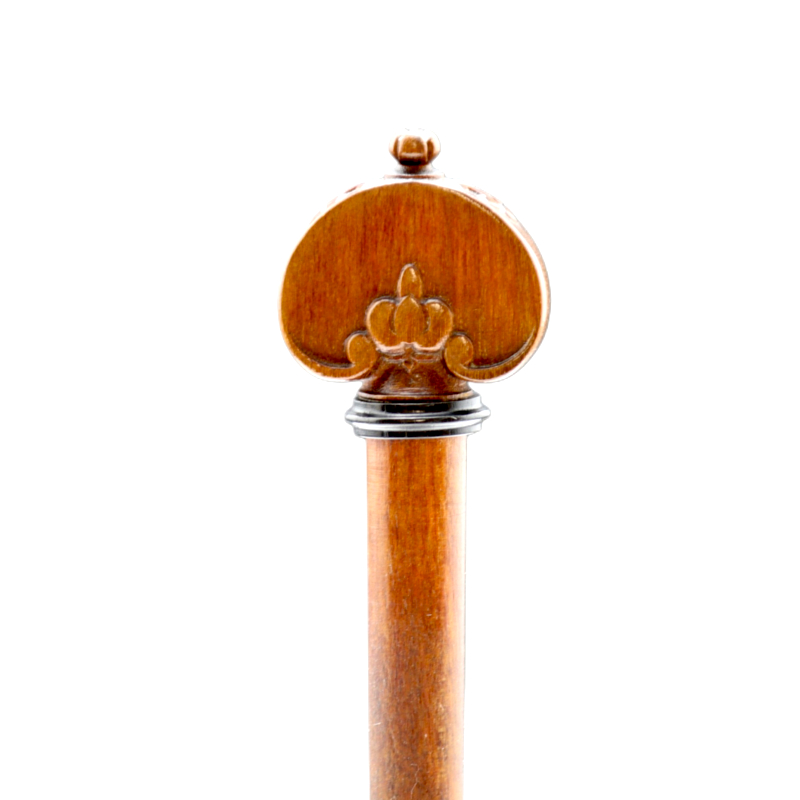
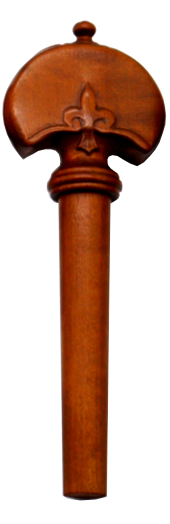
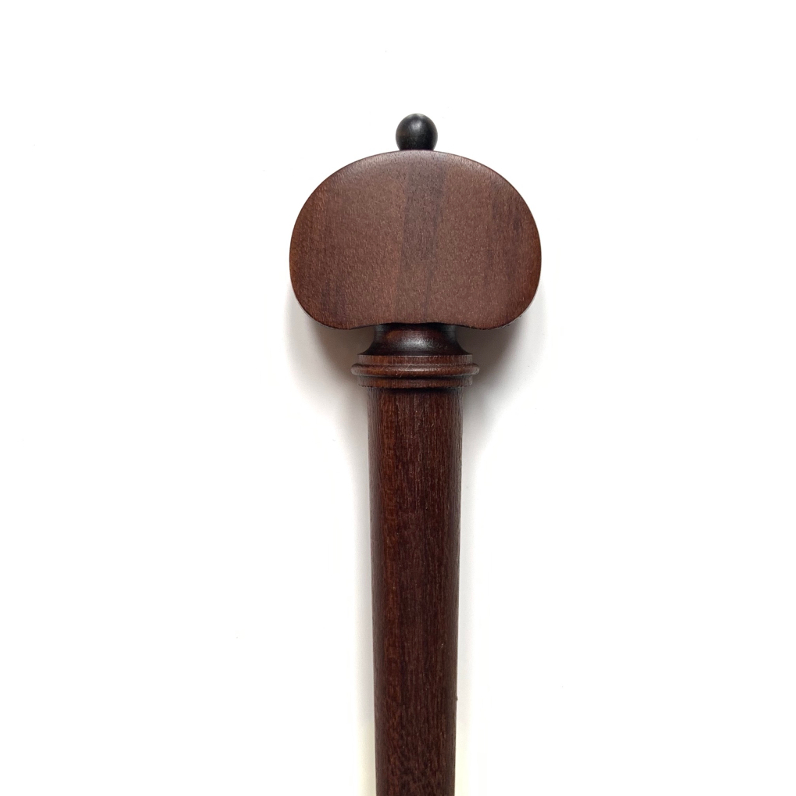
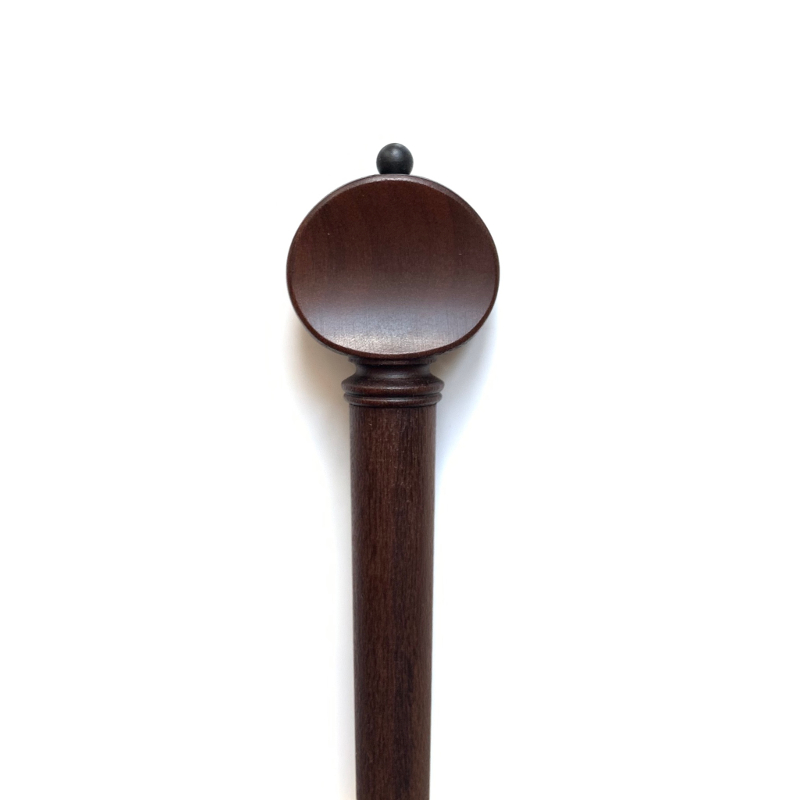
A finely made peg should feel natural to use while also fitting harmoniously into the visual character of the instrument.
For demanding musicians and violin makers, this apparently small detail is therefore highly important.
Different materials have their own character in colour, density, weight and feel. But even an exceptionally well-made peg reaches its full potential only when it is individually fitted to the specific pegbox.
At Berdani, we see this combination of precise manufacturing, selected materials and careful craftsmanship as the foundation of a high-quality setup.
How to Keep Violin Pegs Reliable Over Time
Regular and restrained care is usually more effective than repeated emergency fixes.
Tune with controlled inward pressure instead of forcing the peg into the pegbox at the end of the movement.
When changing strings, make sure that the winding remains clean and even.
Store the instrument in a case that protects it from rapid changes in temperature and humidity.
After transporting the violin in winter, allow it some time to adjust to room temperature before making major tuning corrections. If the instrument is still very cold, both wood and strings may still be reacting to the temperature change.
Have the Pegs Checked During Regular Maintenance
It is worth having the pegs checked during a regular instrument inspection even if they still appear to function reasonably well.
Small irregularities or changes in fit can usually be corrected much more gently when they are noticed early.
Musicians who play their instrument regularly often feel the first changes in their hands: the turning resistance changes, the peg starts to move less smoothly, or the tuning no longer remains stable throughout a rehearsal.
These observations are extremely useful for the violin maker.
A Good Peg Should Work Almost Unnoticed
A properly fitted peg should ideally remain almost unnoticed.
It should provide exactly the resistance the hand expects, hold the pitch reliably and still allow precise tuning.
Then it returns to the background, allowing sound, expression and attention to remain fully with the music.