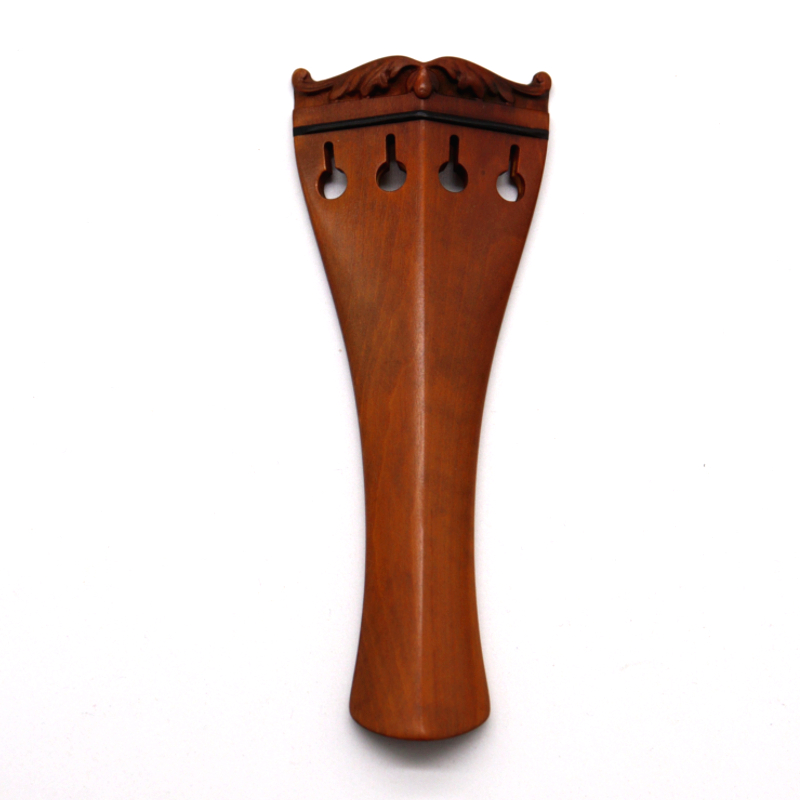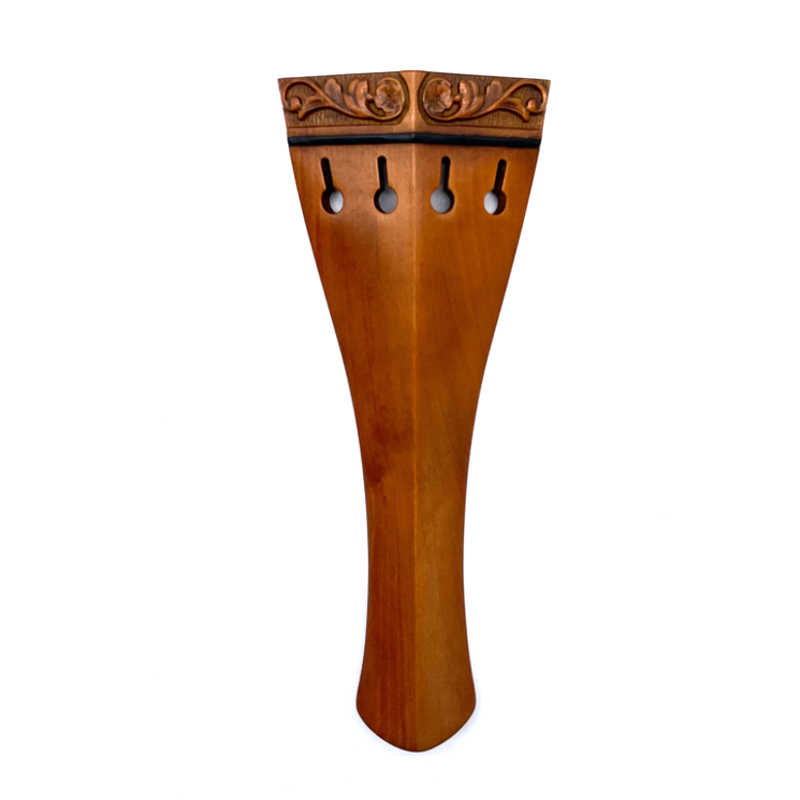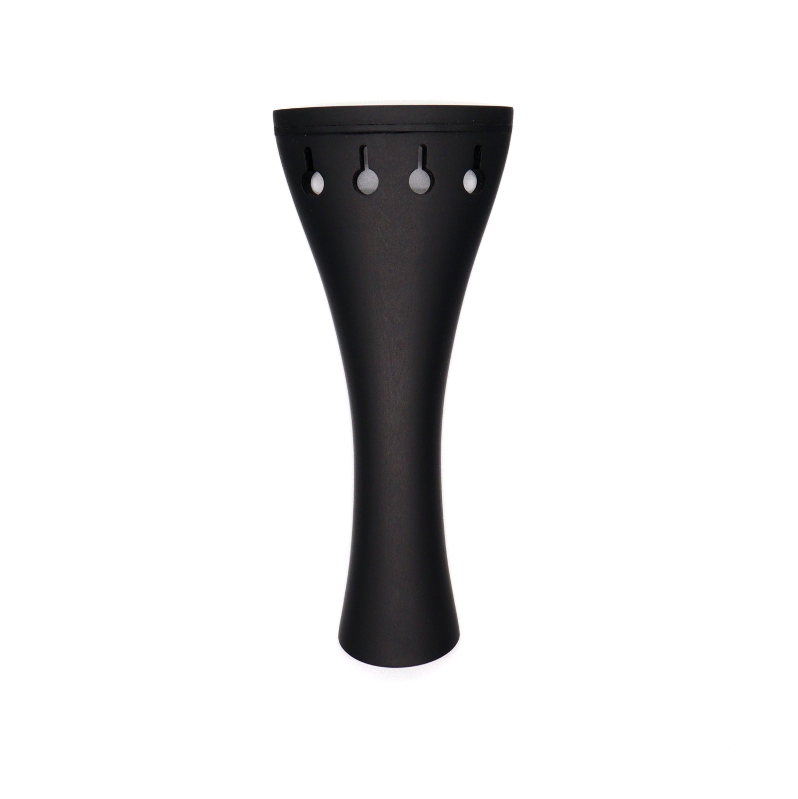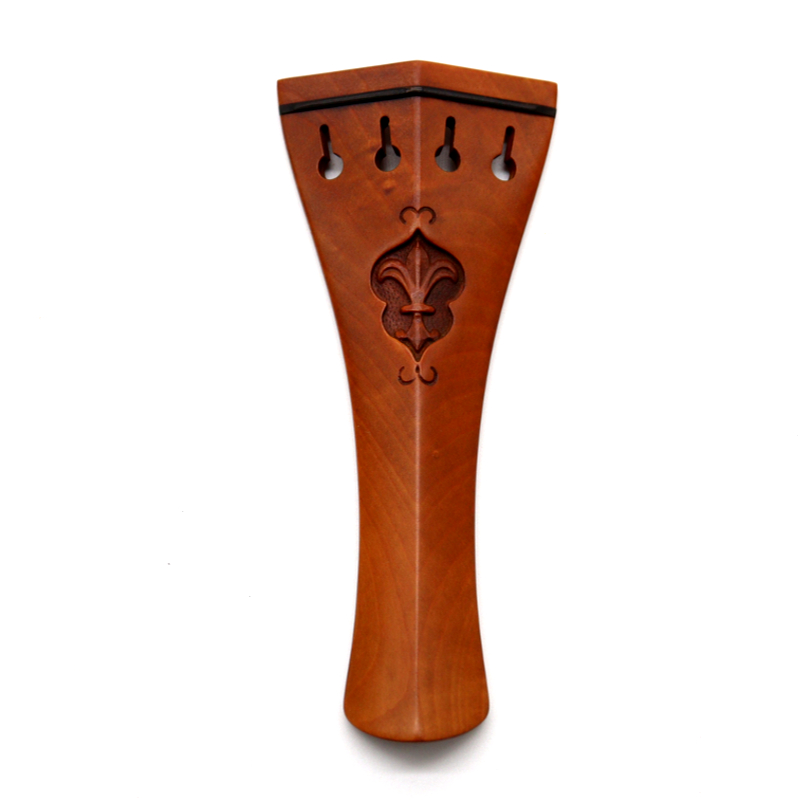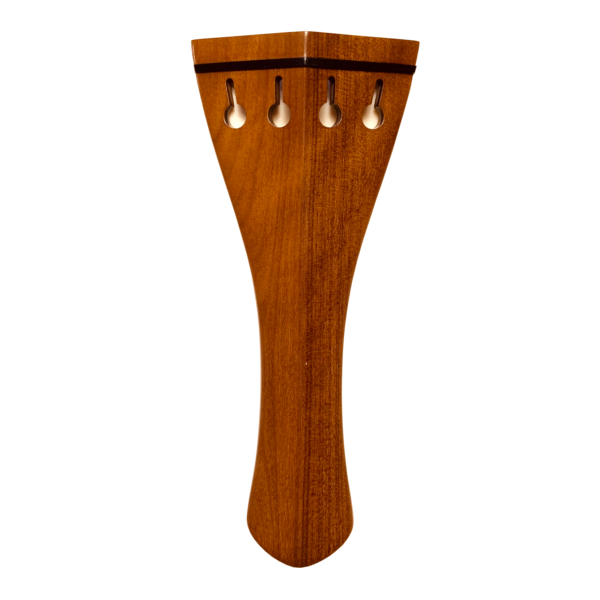

Which woods are suitable for violin tailpieces? Ebony, Castello boxwood and English boxwood offer different characteristics in terms of surface finish, workability and weight. However, choosing the right tailpiece means assessing the finished component: its material, shape, length, fine tuners and suspension all need to suit the instrument. A particular wood species alone does not guarantee a warmer sound or an easier response.
At Berdani, we distinguish between Central African ebony, Boxwood and Dark Boxwood made from Castello boxwood, and English boxwood. Modern alternatives such as Berdani’s Dark Paper and Sonowood offer further options. Understanding their differences helps you discuss the choice more precisely with your violin maker.
Why the tailpiece material matters
The tailpiece holds the lower ends of the strings and is secured to the end button by the tailgut. It therefore forms part of the violin’s vibrating system. Its mass and the way it is suspended influence its resonances and can affect the behaviour of the instrument.
This explains why changing a tailpiece may produce differences you can hear or feel while playing. It also explains why broad generalisations are unreliable: “black wood sounds darker” or “boxwood opens up the violin” are not dependable selection rules. What matters is how a particular tailpiece interacts with a particular violin.
Colour serves a different purpose. It determines whether the fittings create a strong contrast with the varnish or complement its warmer tones. This visual choice can quite reasonably reflect your personal taste.
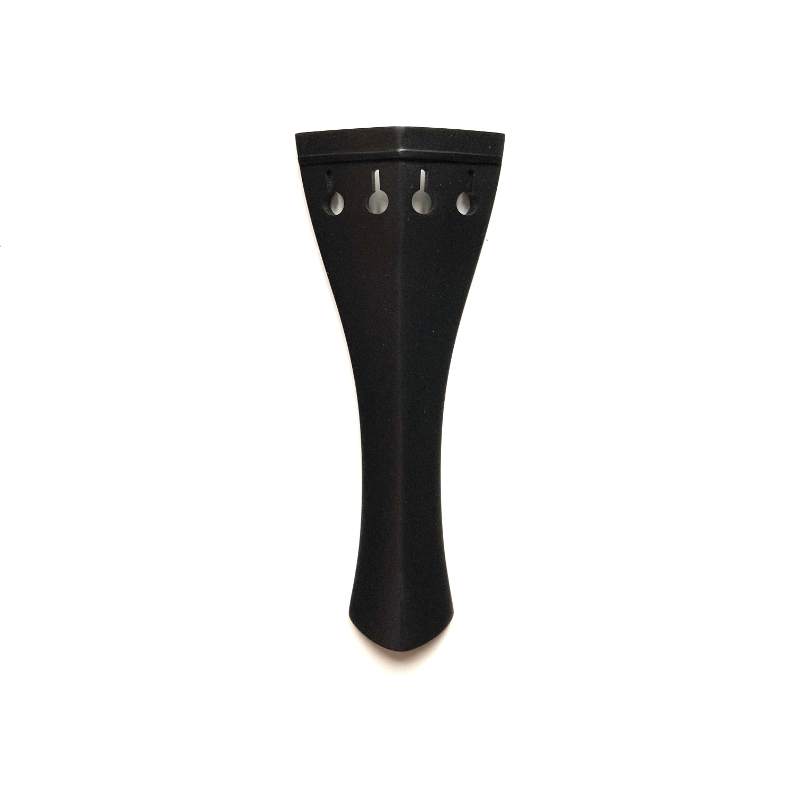
Ebony: a dark appearance and a dense material
Central African ebony is a classic choice for dark Berdani fittings. Its hardness and fine texture allow precise contours and a carefully finished surface. Visually, it pairs naturally with black pegs, chinrests and end buttons.
When considering its acoustic role, the actual weight matters. A slim, carefully shaped ebony tailpiece can weigh less than a more substantial model made from another material. The wood’s name alone therefore does not tell you how heavy the finished component will be.
If your violin already has an ebony tailpiece, exploring a different setup does not necessarily mean changing the wood. Another model, an adjusted length or a different arrangement of fine tuners may also provide a useful comparison.
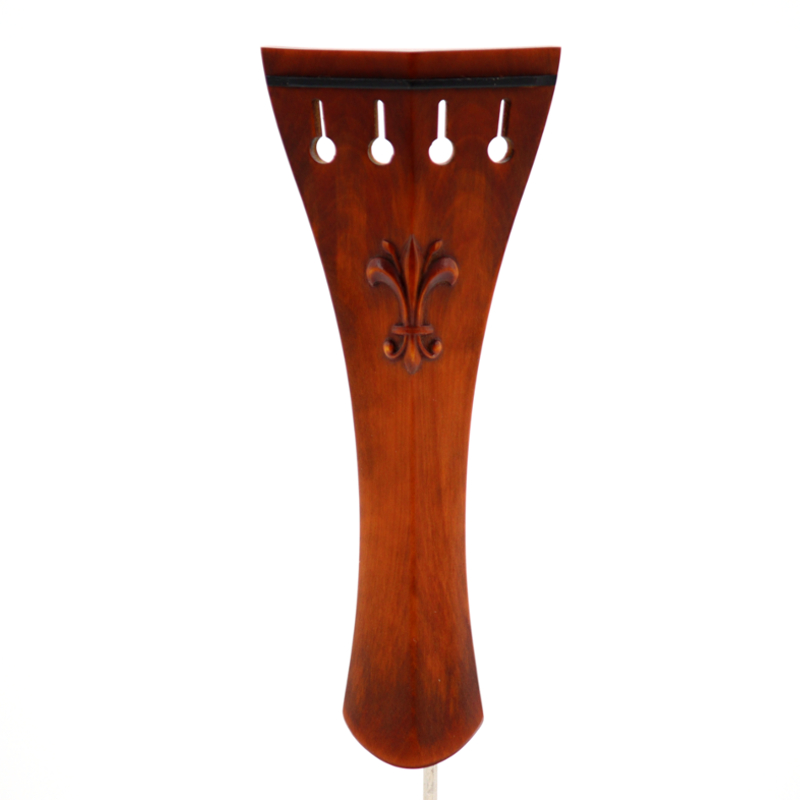
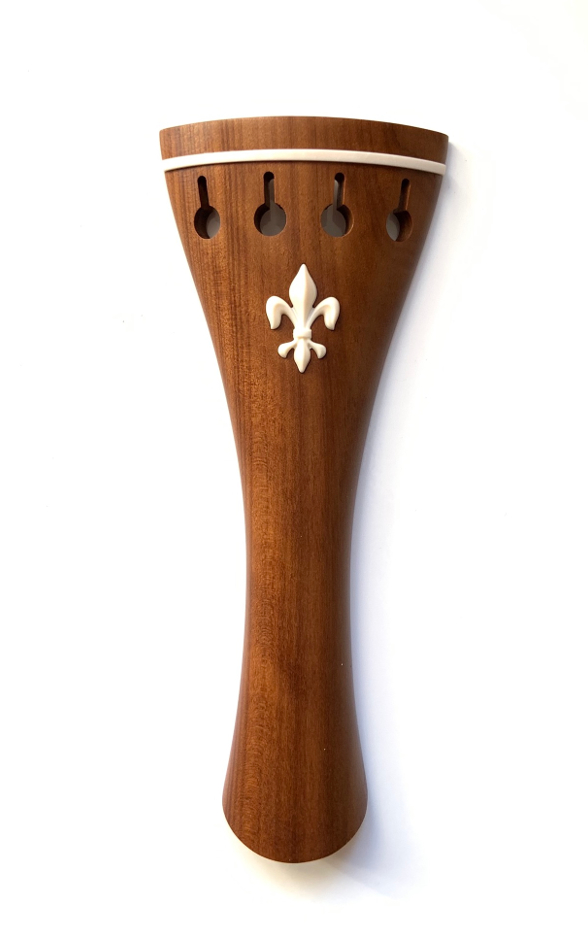
Boxwood and Dark Boxwood: Castello boxwood in two shades
At Berdani, both Boxwood and Dark Boxwood are made from Castello boxwood, botanically Calycophyllum multiflorum. The trade name “boxwood” should not be confused with botanical identity: Castello boxwood is a different species from European or English boxwood.
Our medium-brown Boxwood and dark-brown Dark Boxwood acquire their colours through heat treatment in an oven. No chemical stains are used in this colouring process. The surfaces are then oiled. The natural wood structure remains visible, giving each component its individual character.
Boxwood is particularly well suited to a warm, medium-brown set of fittings. Dark Boxwood offers a deeper shade while retaining a distinctly brown wooden appearance. For a coherent overall look, the tailpiece, pegs and chinrest should be selected with attention to both colour and surface finish.
The colour difference is not, however, a reliable indication of a particular tonal character. When comparing the two versions acoustically, the model, dimensions and finished weight also need to be considered.
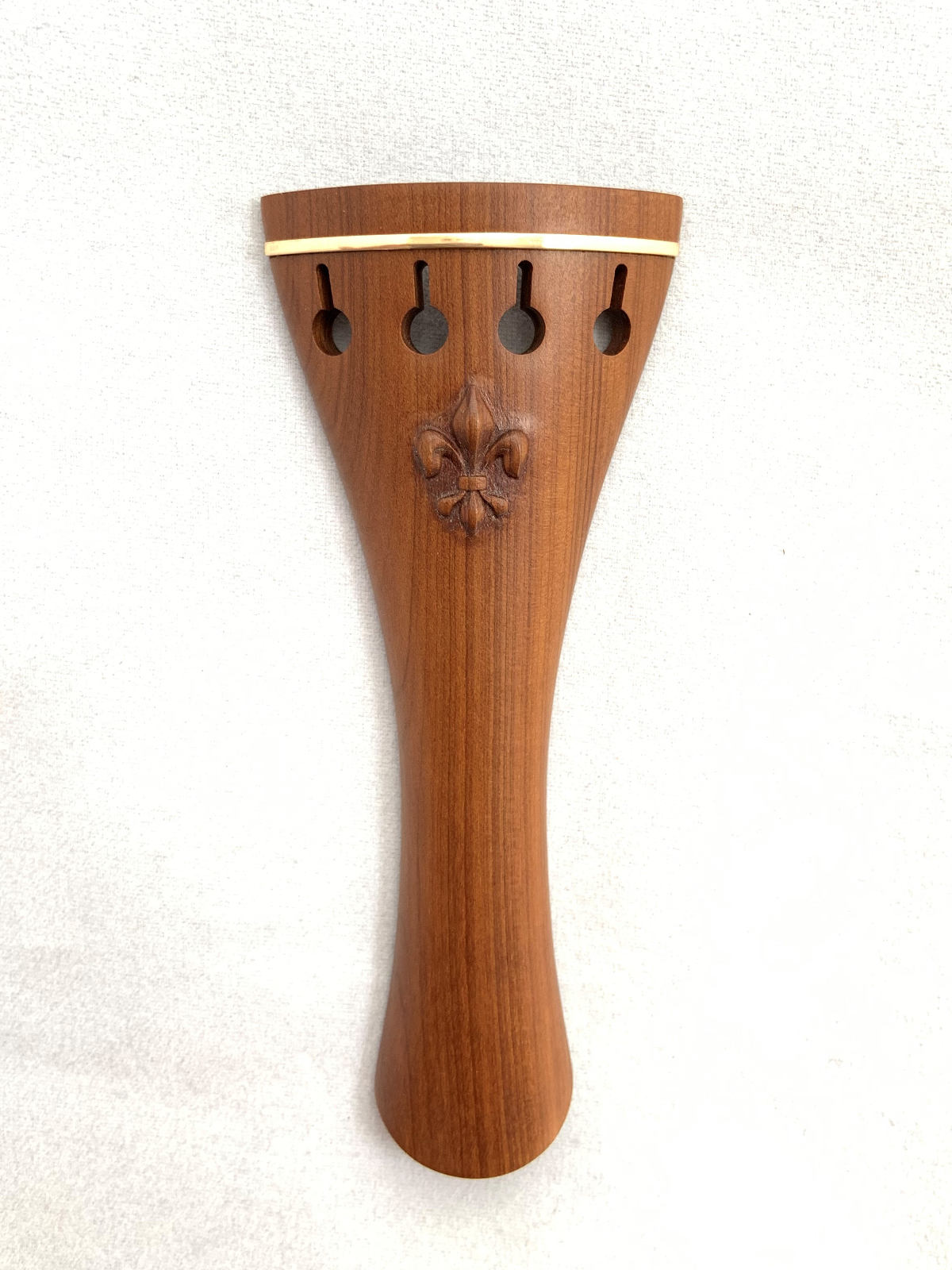
English boxwood: a distinct species with a fine texture
Our English boxwood comes from England and belongs to the species Buxus sempervirens. Its fine texture makes it suitable for carefully worked contours and small decorative details. It differs from Castello boxwood both botanically and in the way it is processed.
At Berdani, its traditional colouring is achieved using saltpetre and ammonia. This treatment is distinct from the heat treatment used for our Boxwood and Dark Boxwood versions.
Weight also deserves close attention. English boxwood is a dense wood, and fittings made from it can be comparable in weight to ebony. The common assumption that a boxwood tailpiece is always a particularly lightweight alternative is therefore too simplistic. The weight of the selected model remains the relevant factor.
Dark Paper and Sonowood: alternatives to traditional woods
Berdani’s Dark Paper is not a wood species, but a material made from highly compressed paper and resin. It provides a dark alternative to ebony with a visually understated finish. The same questions apply when choosing it: do the shape, weight, length and construction suit the intended instrument?
Sonowood, by contrast, is made from densified wood. Produced by Swiss Wood Solutions, it uses locally sourced wood species whose properties are modified through densification. Its structure is therefore different from that of a paper-and-resin composite.
Both materials broaden the possibilities for design and material selection. Neither automatically provides a tonal advantage, and a modern material is not necessarily lighter. The right version should be chosen by assessing the actual component. You can find further information in our guide to Berdani materials.
Consider shape, weight and afterlength together
The wood species is only one part of the choice. Length, width, thickness and the shaping of the underside affect both mass and its distribution. Two tailpieces made from the same wood can therefore have noticeably different characteristics.
The fret, inlays and fine tuners also contribute. Additional metal components alter the total weight, while some fine-tuner designs change the string’s effective contact point. Comparing materials tells you little if several of these features change at the same time.
String afterlength is the freely vibrating section of string between the bridge and its contact point at the tailpiece. This contact point is usually the tailpiece fret, although certain fine-tuner designs can place it elsewhere. The actual contact points matter, rather than simply the distance between the bridge and the front wooden edge of the tailpiece.
The tailpiece length and tailgut adjustment need to work together. The appropriate setup cannot be determined solely by a standard measurement or the choice of wood.
How to choose a suitable tailpiece
Before replacing a tailpiece, it helps to define your aim. Is the main goal a better visual match? Are you considering total weight, a different response or a more balanced feel across the strings? A precise question makes the comparison more useful.
- Record the existing setup: Note the material, model, length, fine tuners and afterlength. Your violin maker can weigh the tailpiece when it is removed.
- Plan a focused comparison: To compare materials, choose similar shapes and the same fine-tuner arrangement wherever possible.
- Assess it musically: Play familiar passages across all four strings, considering response, string crossings, dynamics and the overall playing feel.
- Have the fitting checked: String seating, the tailgut, clearance above the top plate and secure attachment all belong to a professional setup.
If several features are changed at once, you can assess the overall result. Attributing the difference to the wood alone would not be reliable.
Choosing materials at Berdani: fitting the instrument
Our approach brings material selection together with design and craftsmanship. A beautiful surface alone is not enough: carefully finished string holes and slots, smooth transitions and appropriate proportions are equally important in a high-quality tailpiece.
For a consultation, photographs of the violin and its existing fittings are helpful. These should be accompanied by the current tailpiece length, details of the fine tuners and a clear description of the result you would like to achieve. This helps establish which version offers a sensible starting point and which measurements need to be checked beforehand.
Our selection of violin tailpieces includes various models and material options. The final acoustic assessment takes place on the properly set-up instrument.
Caring for the surface and maintaining reliable function
For routine care, a soft, dry cloth is generally sufficient. Gently remove dust and fresh rosin residue without pressing on delicate edges. Aggressive cleaners, furniture polish and applying additional oil yourself are not appropriate routine treatments for fittings mounted on an instrument.
If you notice cracks, damaged string holes or slots, or problems with the fine tuners or tailgut, have a violin maker investigate the cause. Changing materials should also be part of a professional setup. The right choice combines an appearance you enjoy with a component that functions securely and suits your violin musically.