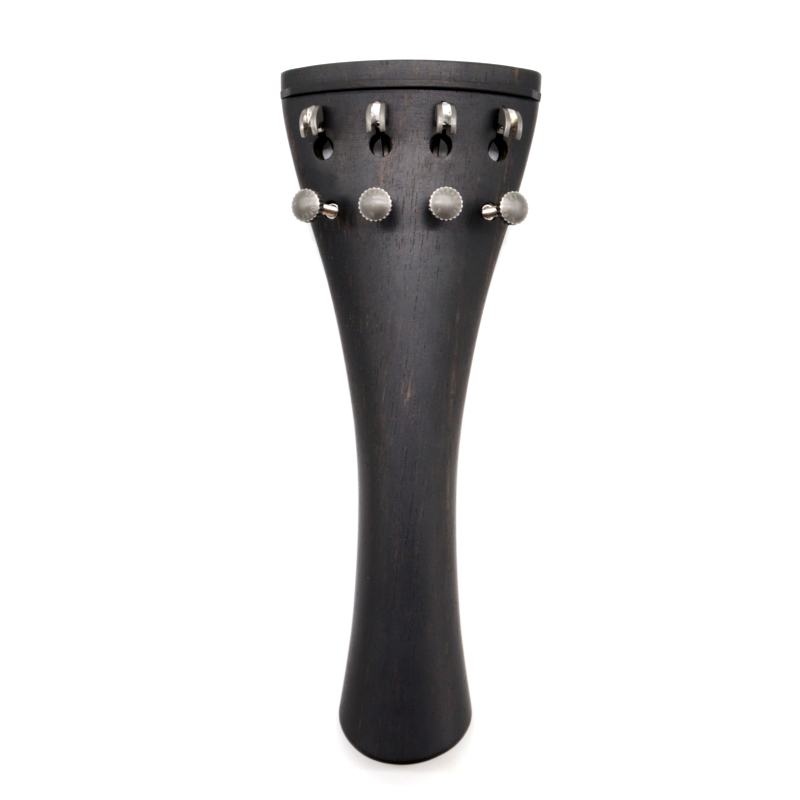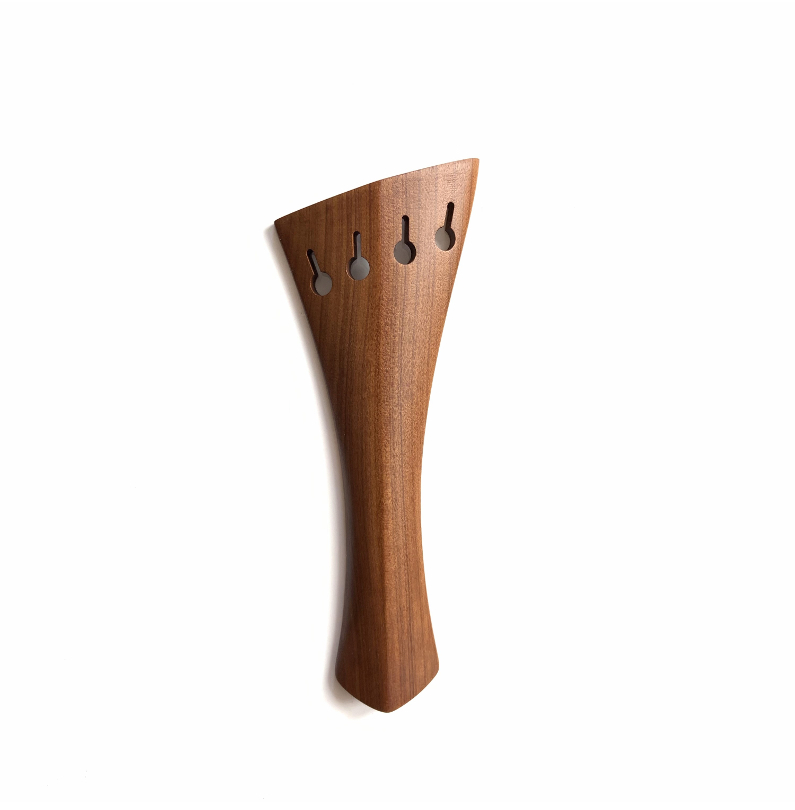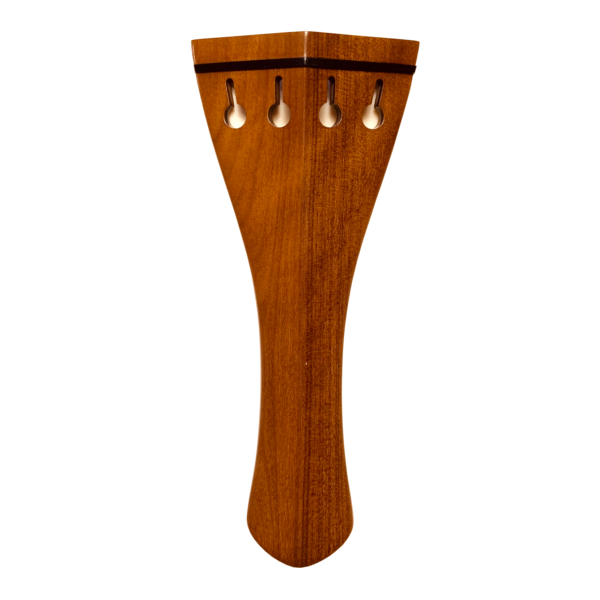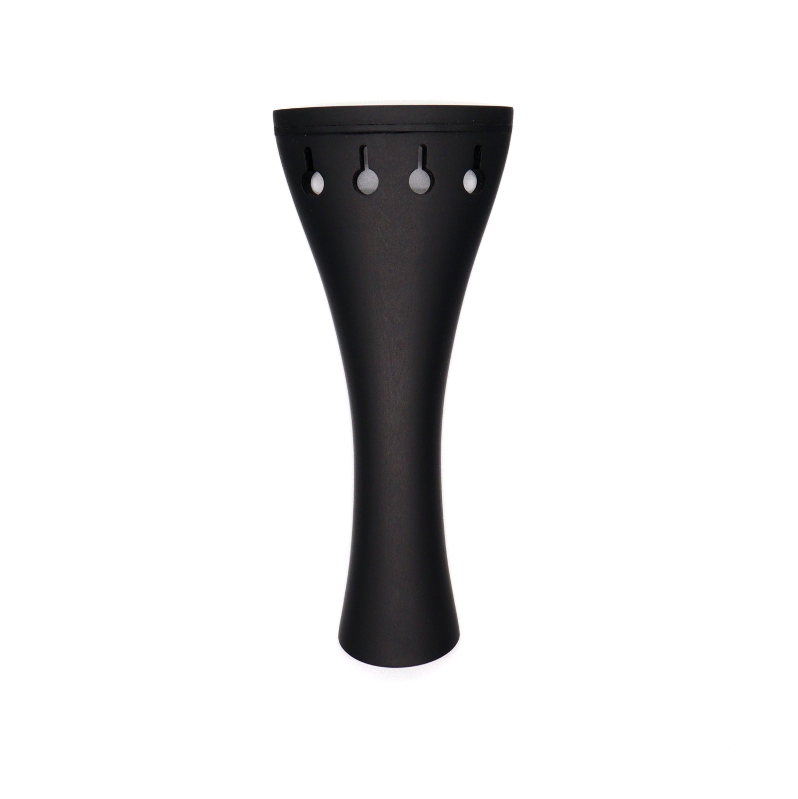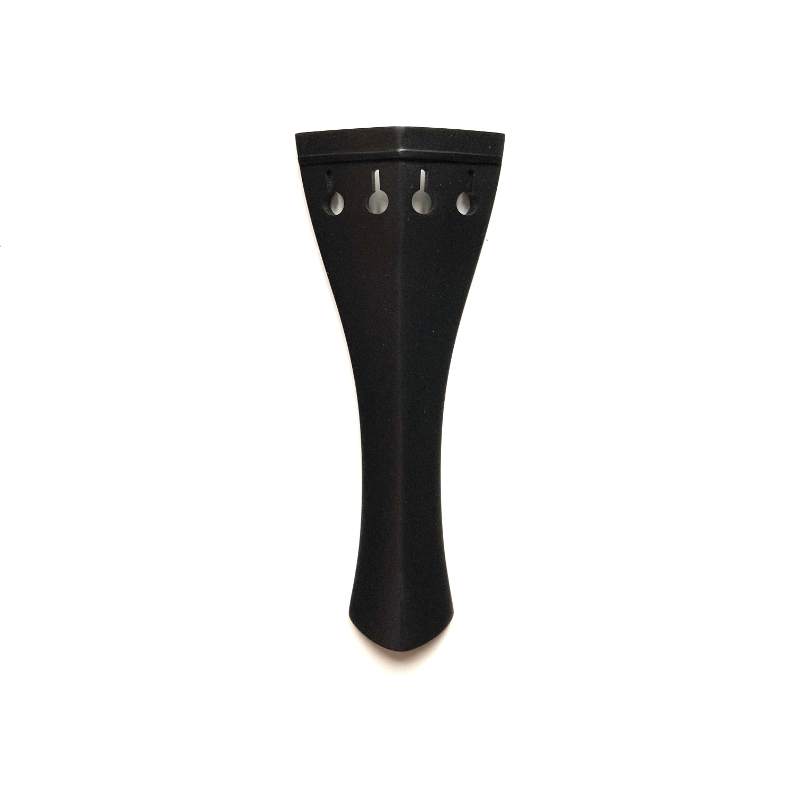

A custom-made tailpiece is designed around the dimensions, fittings and musical requirements of a particular instrument. Its length, weight, string spacing and suspension must work together. Two measurements are especially important: the distance from the bridge to the edge of the top plate at the lower end of the instrument, and the freely vibrating string length between the bridge and the tailpiece fret.
For violins, violas, cellos and historical instruments, a custom design can be worthwhile when an existing model does not adequately meet these requirements. It allows technical function and visual proportions to be developed together.
When does a custom-made tailpiece make sense?
An existing tailpiece model can work extremely well when its length, width and mass suit the instrument. A custom design becomes useful when the desired setup cannot be achieved with a suitable standard model. Examples include violas with unusual body dimensions, instruments with a distinctive distance between the bridge and the lower edge of the top plate, or historical setups.
Specific string spacing, particular fine tuners, a target weight or an individual appearance may also justify a custom-made tailpiece. However, the complete setup still needs to be assessed. Worn strings, an unsuitable bridge or an unfavourable soundpost adjustment cannot be corrected by a new tailpiece alone.
The starting point: the distance from the bridge to the top plate’s lower edge
To determine a suitable tailpiece length, an important measurement is the distance from the bridge to the edge of the top plate at the lower end of the instrument. This means the plate edge in the area of the tailpiece suspension. The saddle is not the reference point for this measurement.
This distance establishes the available space for the desired string afterlength and the positioning of the tailpiece. Together with the fret position and the intended suspension arrangement, it helps determine which tailpiece length will suit the instrument.
Body length alone is not sufficient. Two instruments with similar external dimensions may have different bridge positions and therefore different amounts of space available for the tailpiece. This makes measuring the individual instrument particularly valuable for violas.
Afterlength: the vibrating string length between the fret and bridge
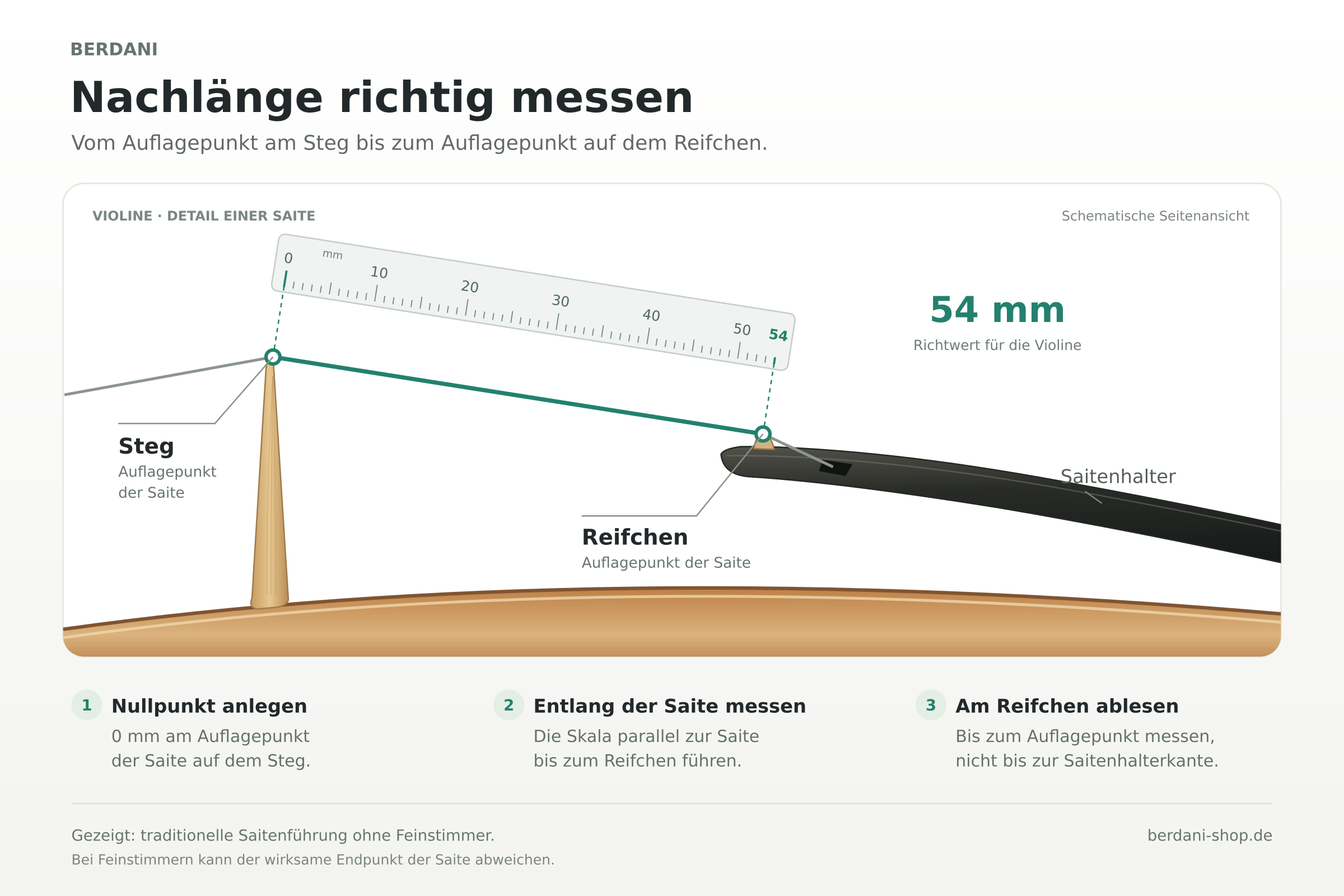
The afterlength is the freely vibrating section of string behind the bridge. With a traditional string attachment, it extends from the string’s contact point on the bridge to its contact point on the tailpiece fret.
The fret is the narrow raised ridge near the bridge-facing end of the tailpiece, over which the strings pass. Measure along the string between these two actual contact points. Neither the front edge of the tailpiece nor its string holes defines this measurement.
The overall length of a tailpiece therefore does not, by itself, determine whether a model is suitable. The actual position of the fret after installation is equally important.
For the individual adjustment described here, we use the following starting values:
- Full-size violin: 54 mm of vibrating string length between the bridge and fret.
- Viola: 74 mm as a target starting point, where the instrument’s string length and construction allow.
- Full-size cello: approximately 120 mm as a starting point for further adjustment.
These values are not fixed requirements for every instrument. Viola body lengths, playing string lengths and bridge positions vary considerably. Smaller instruments and historical setups also require individual consideration. The final adjustment must therefore be assessed on the actual instrument.
The string sections between the bridge and fret can vibrate and interact with the rest of the instrument. Changes in their length may affect resonances and playing response. However, increasing or reducing the afterlength does not produce the same tonal change on every instrument.
Adjusting the tailcord correctly
The tailcord connects the tailpiece to its anchoring point at the lower end of the instrument and passes over the saddle. Its length plays a substantial role in determining where the tailpiece sits under string tension.
The lower end of the tailpiece should sit a short distance inward from the saddle, towards the bridge. The tailpiece must remain freely suspended, with sufficient clearance above the top plate and from surrounding components. It must not rest on or rub against them.
The tailcord should be neither unnecessarily long nor too short. With the same tailpiece, lengthening the tailcord moves the tailpiece towards the bridge and reduces the afterlength. Shortening it moves the tailpiece towards the lower end of the instrument and increases the afterlength.
A suitable adjustment therefore considers both the desired vibrating string length between the bridge and fret and the appropriate position of the tailpiece’s lower end. If an existing model cannot satisfy both conditions, a different tailpiece length or a custom-made design may provide a suitable solution.
The saddle is therefore important for routing the tailcord and positioning the installed tailpiece. However, the underlying length measurement used for planning is taken from the bridge to the edge of the top plate at the lower end of the instrument.
What information is needed for a custom-made tailpiece?
The process starts with the instrument’s actual geometry. Alongside its size, the correct bridge position, the distance to the lower edge of the top plate and the desired afterlength are relevant. The intended fittings and the player’s tonal preferences also form part of the discussion.
The following information is helpful when making an enquiry:
- Instrument type, size and body length.
- Distance from the bridge to the edge of the top plate at the lower end of the instrument, with clearly identifiable measuring points.
- Current vibrating string length between the bridge and tailpiece fret.
- Playing string length: the vibrating string length between the nut and bridge.
- Length and width of the existing tailpiece.
- String manufacturer, string set and fine tuners used.
- Photographs from above and from the side, clearly showing the bridge, fret, tailpiece and suspension.
- Preferred material and model, together with a description of the current playing response.
Playing string length and afterlength refer to two different sections of the string. The playing string length extends from the nut to the bridge. The afterlength lies behind the bridge and extends to the fret or to the actual endpoint of the freely vibrating string.
The measuring points are agreed before production begins. A photograph with a ruler in position helps prevent misunderstandings caused by using different reference edges.
Considering string alignment and slot spacing
Alongside length, the width of the string attachment area matters. The spacing of the slots and the position of the individual contact points are particularly important. They determine how the strings run from the bridge to the tailpiece.
A tailpiece with a broad outer shape may still have closely spaced string slots. Conversely, different outlines can accommodate similar string spacing. External width alone is therefore insufficient for assessing the functional geometry.
A custom design allows the string alignment, model outline and existing bridge spacing to be considered together. The strings must be securely attached, and sharp edges must not place unnecessary stress on them at their contact points.
Adjusting weight and mass distribution
Tailpiece weight is another element of tonal adjustment. A lighter model may work well on one instrument, while another responds better to greater mass. There is no universal rule that lighter is always better.
In addition to total weight, mass distribution, material stiffness and suspension all play a role. Added fine tuners also change the completed assembly. A tailpiece should therefore be assessed with the fittings that will actually be used during playing.
With a custom-made tailpiece, the outline, thickness and underside can be shaped deliberately. The areas around the string attachments and tailcord holes must remain strong enough for long-term use. Tonal adjustment and structural reliability belong together.
Choosing the material and finish
Berdani works with materials including ebony, Boxwood, Dark Boxwood, English boxwood, Berdani’s Dark Paper and Sonowood. The choice depends on the desired appearance and the technical requirements of the particular tailpiece.
Berdani’s Boxwood and Dark Boxwood are both made from Castello boxwood. Their medium-brown and dark-brown colours are achieved through controlled heat treatment in an oven, without chemical stains. The material is then oiled.
English boxwood is a different material with different properties. Depending on the intended finish, it can be used in its natural colour or traditionally stained. Ebony offers a classic black appearance. Berdani’s Dark Paper is a highly compressed paper material used as an alternative to ebony.
The material name alone cannot reliably predict the resulting sound. What matters is the finished component, with its particular mass, shape and suspension, on the individual instrument.
Developing the shape and fret together
The outline of a tailpiece should suit the proportions of the instrument. French, English and historical models offer different design possibilities. A custom version can also incorporate particular contours, inlays or carvings.
The fret has a technical function: with a traditional string attachment, it defines the string’s contact point at the bridge-facing end of the tailpiece and therefore the endpoint of the afterlength. Its position, height and careful shaping must suit the intended construction.
For historical instruments, the shape and attachment method are adapted to the particular setup. Modern starting values cannot be transferred unchanged to every historical configuration.
Planning fine tuners from the beginning
Whether a tailpiece will be used without fine tuners, with separate fine tuners or with an integrated mechanism should be established before production. This decision affects weight, space requirements and string attachment.
With certain fine-tuner designs, the actual endpoint of the freely vibrating string is located at the fine tuner. In that case, the effective afterlength of that string is not described by the bridge-to-fret distance alone. The relevant points are always the actual contact or attachment points between which the string can vibrate freely.
Fine tuners must suit the strings and their end fittings. Their moving parts also need sufficient clearance above the instrument’s top plate. These requirements are considered during the design stage.
From planning to the finished tailpiece
Once the dimensions, material and fittings have been agreed, the basic shape is produced. The precise outline, underside, string attachments and tailcord mounting are then worked out.
The fret position is planned so that the desired vibrating string length between fret and bridge can be achieved with a suitable installed position. This is based on the actual space available between the bridge and the edge of the top plate at the lower end of the instrument.
Final finishing focuses on clean transitions, carefully rounded contact surfaces and an even finish. A carved or elaborately decorated design must meet the same functional requirements.
At Berdani, we combine individual design with violin-making experience from Markneukirchen. The starting question is which dimensions and fittings the particular instrument needs.
Installation and tonal assessment
The final adjustment takes place on the instrument. After professional installation, the tailpiece alignment, clearance above the top plate, tailcord routing and freely vibrating string length between bridge and fret are checked. The intended measurements must be correct under normal string tension.
Depending on its material, a new tailcord may initially settle or stretch. A further check after the first period of playing is therefore useful. The bridge position and alignment are checked at the same time.
Comparable playing conditions help when assessing the tonal result: the same bow, familiar passages and, where possible, the same room. Useful observations include response, articulation, balance between the strings and control at different dynamic levels. These provide a clearer basis for judging whether the new setup suits the player’s needs.
Enquiring about a custom-made Berdani tailpiece
If you would like a custom-made tailpiece, send us photographs, the existing measurements and your preferences for the fittings. Particularly helpful are the distance from the bridge to the edge of the top plate at the lower end of the instrument and the current afterlength between bridge and fret. Together, we can establish whether an existing model is suitable or whether an individual design would be beneficial.
Explore the fittings available in the Berdani shop for an initial overview. For the individual adjustment, we then consider tailpiece length, fret position, string alignment and tailcord together on the instrument.