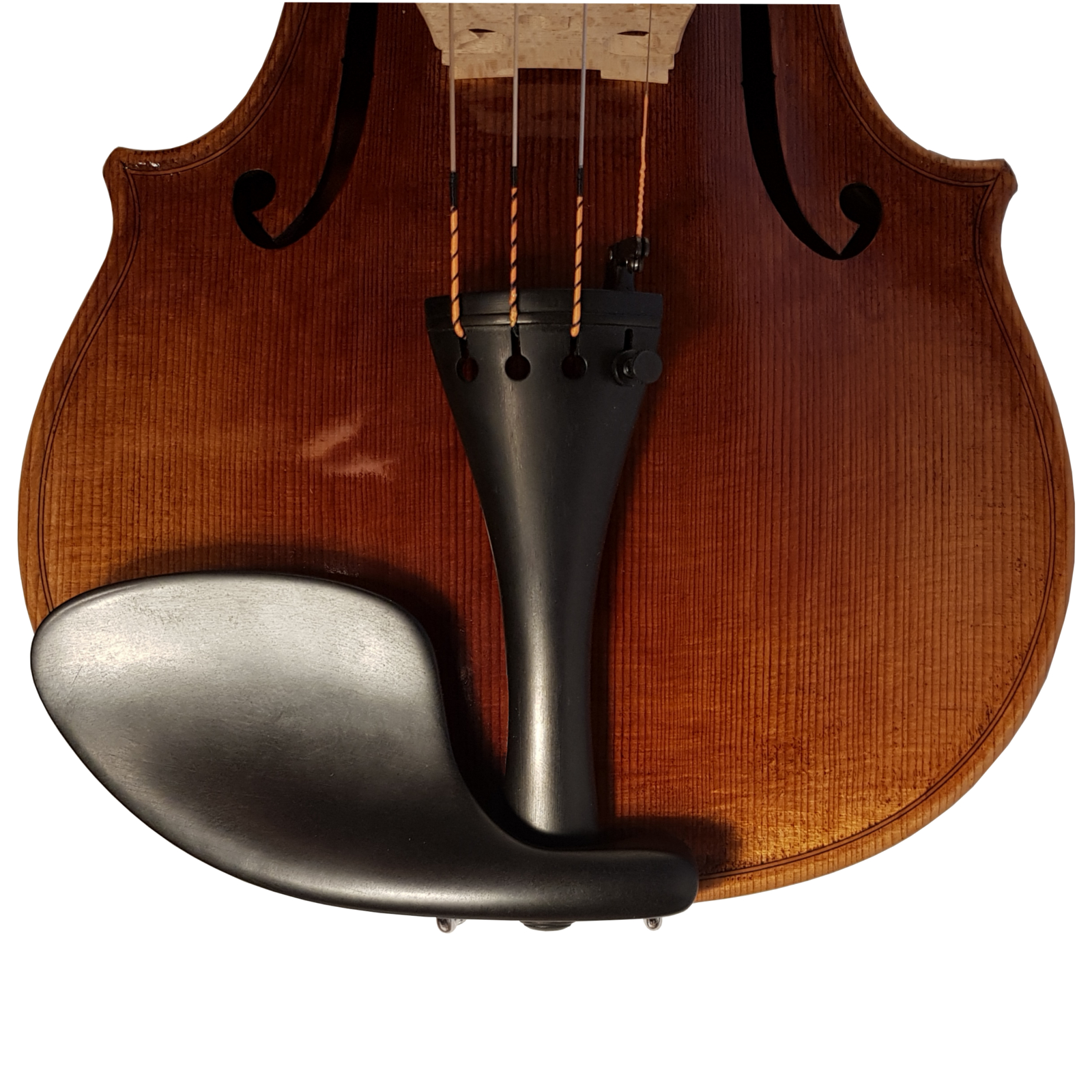

Which Chinrest Is Best for Neck Pain?
Neck pain while playing the violin or viola is often not caused by a single factor. What matters most is the interaction between posture, instrument, chinrest and shoulder rest.
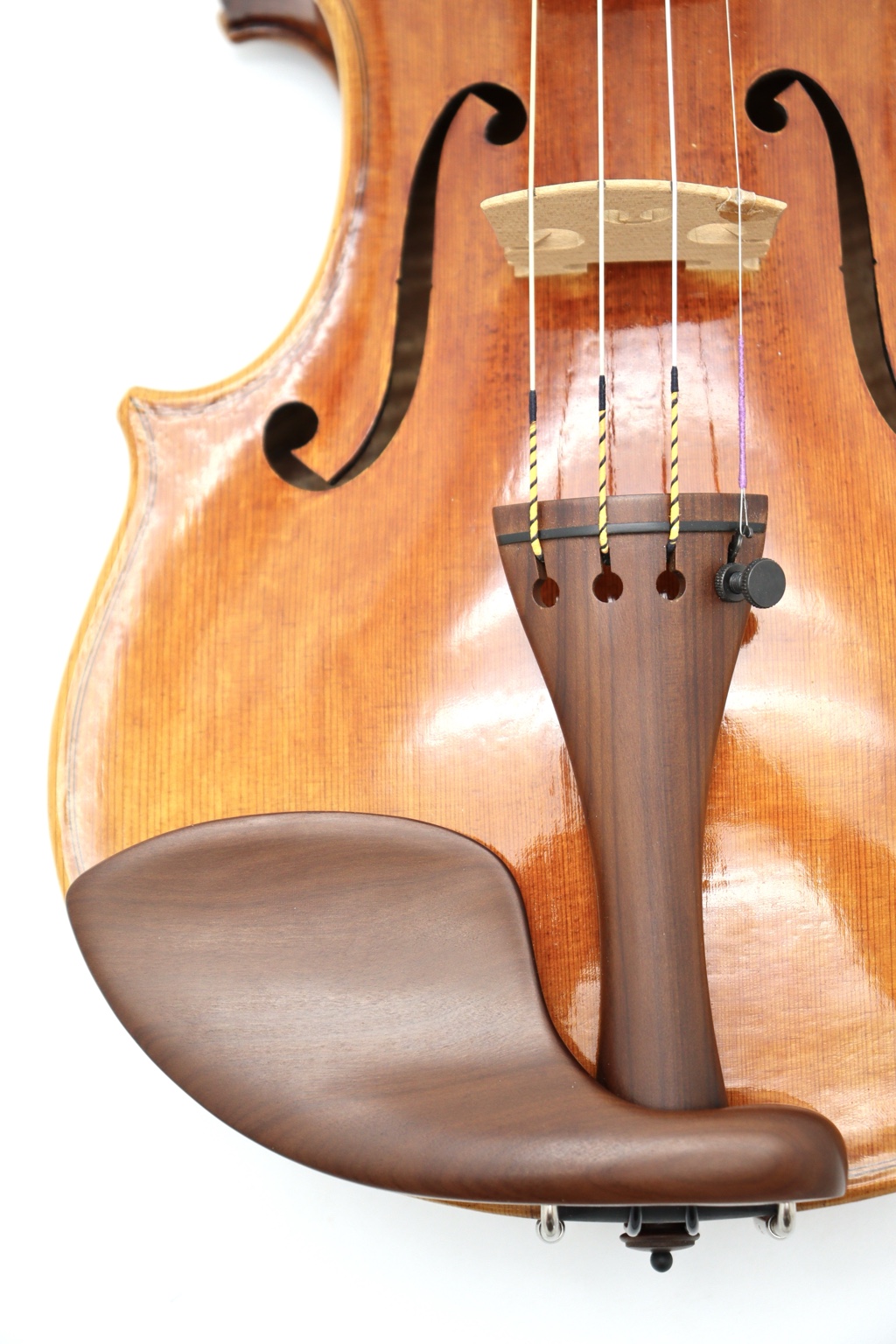
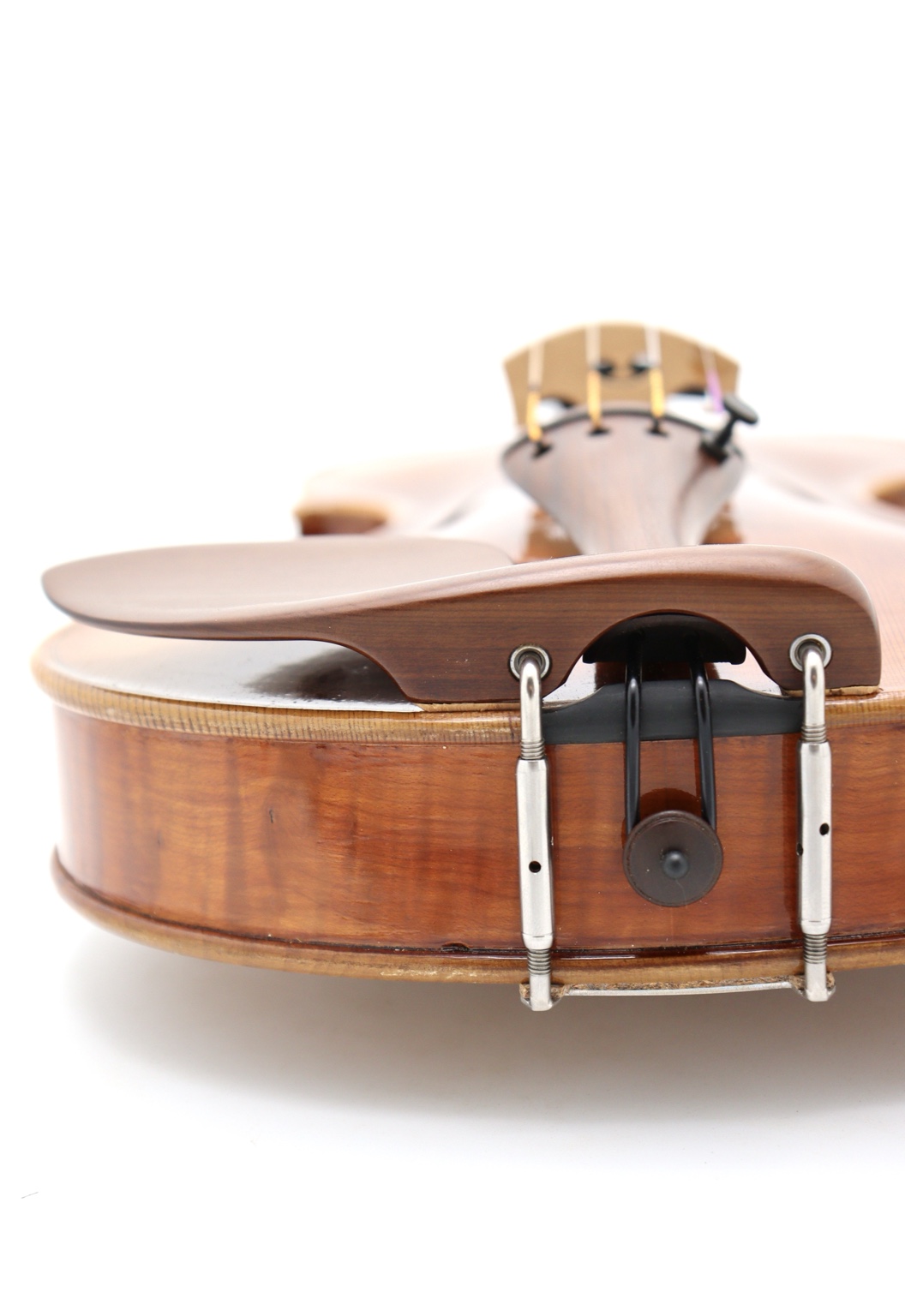
The chinrest plays an important role because it creates the direct connection between the musician and the instrument. If its shape does not suit the jawline or if its height is incorrect, the body often compensates automatically.
The shoulder may lift, the head may tilt or rotate more than necessary, and the instrument may increasingly become clamped between the shoulder and chin.
A well-matched chinrest should feel natural. It should provide security without forcing the head into an unnatural position.
Why Can a Chinrest Cause Neck Pain?
Every musician has different anatomical requirements. Neck length, shoulder shape, jawline, mobility and preferred instrument position can vary considerably.
A chinrest that works perfectly for one player may therefore be completely unsuitable for another.
Typical problems can occur when:
- the chinrest is too low or too high,
- the contact area sits too far to the left or too close to the centre,
- the shape of the cup does not suit the lower jaw,
- hard or poorly shaped edges create pressure points,
- the head must be strongly rotated or tilted while playing,
- the chinrest and shoulder rest are not properly balanced.
These small misalignments often become more noticeable during long rehearsals or concerts. A slightly raised shoulder or a permanently rotated head can create increasing tension in the neck and shoulder area over time.
The Correct Chinrest Height
Height is one of the most important factors when choosing a chinrest.
If the distance between the shoulder and jaw is relatively large, this space should be balanced sensibly by the chinrest and shoulder rest together.
If the chinrest is too low, many musicians tend to lower their head more strongly or raise the left shoulder. A higher model can help create a much more natural playing position.
However, higher does not automatically mean better.
A chinrest that is too high can push the head upwards and may also create tension in the neck.
The aim should be a relaxed and upright position. The head should be able to rest naturally on the chinrest without having to press actively downwards.
Centre-Mounted or Side-Mounted Chinrest?
In addition to height, the position of the contact area is also very important.
Chinrests Over the Tailpiece
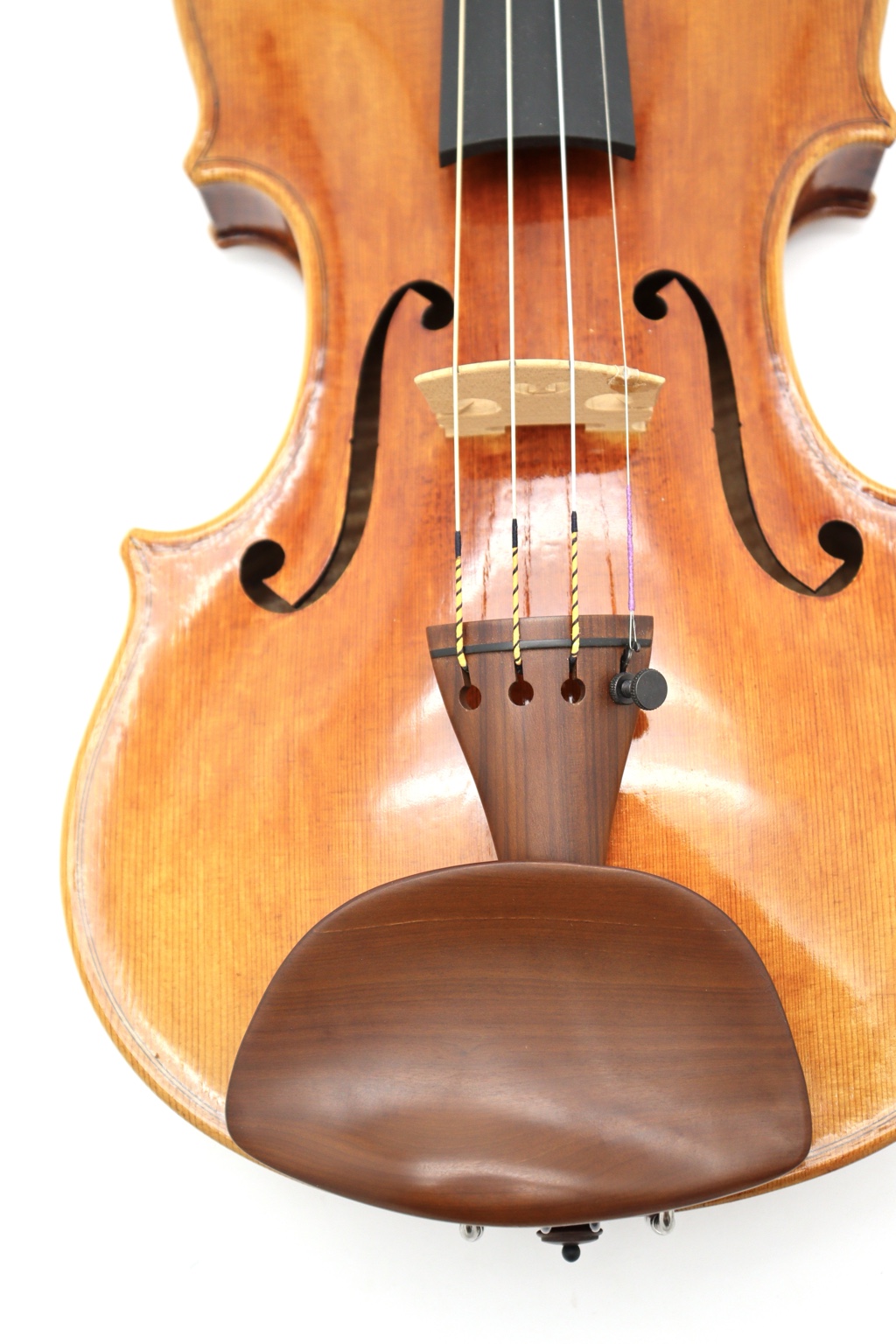
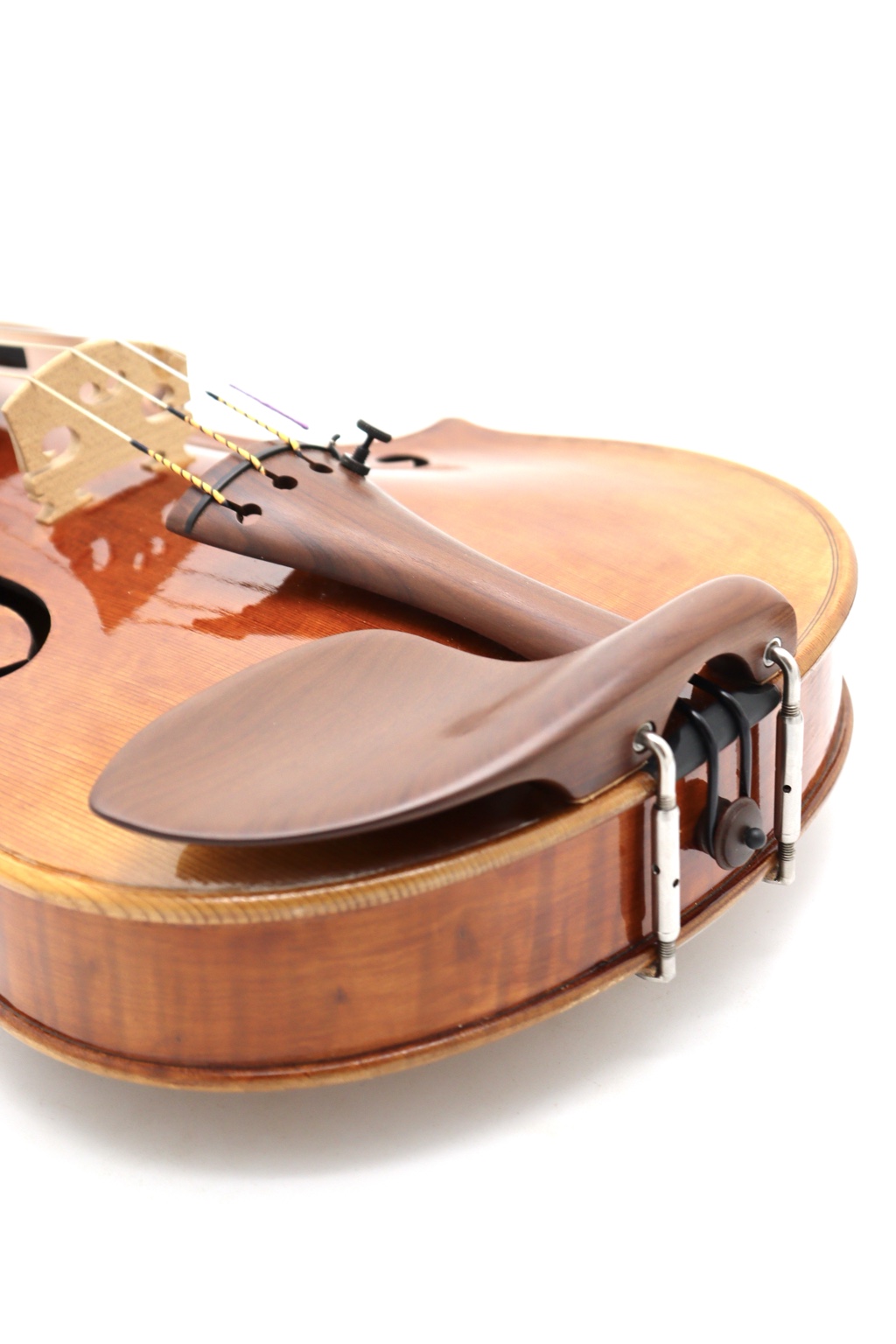
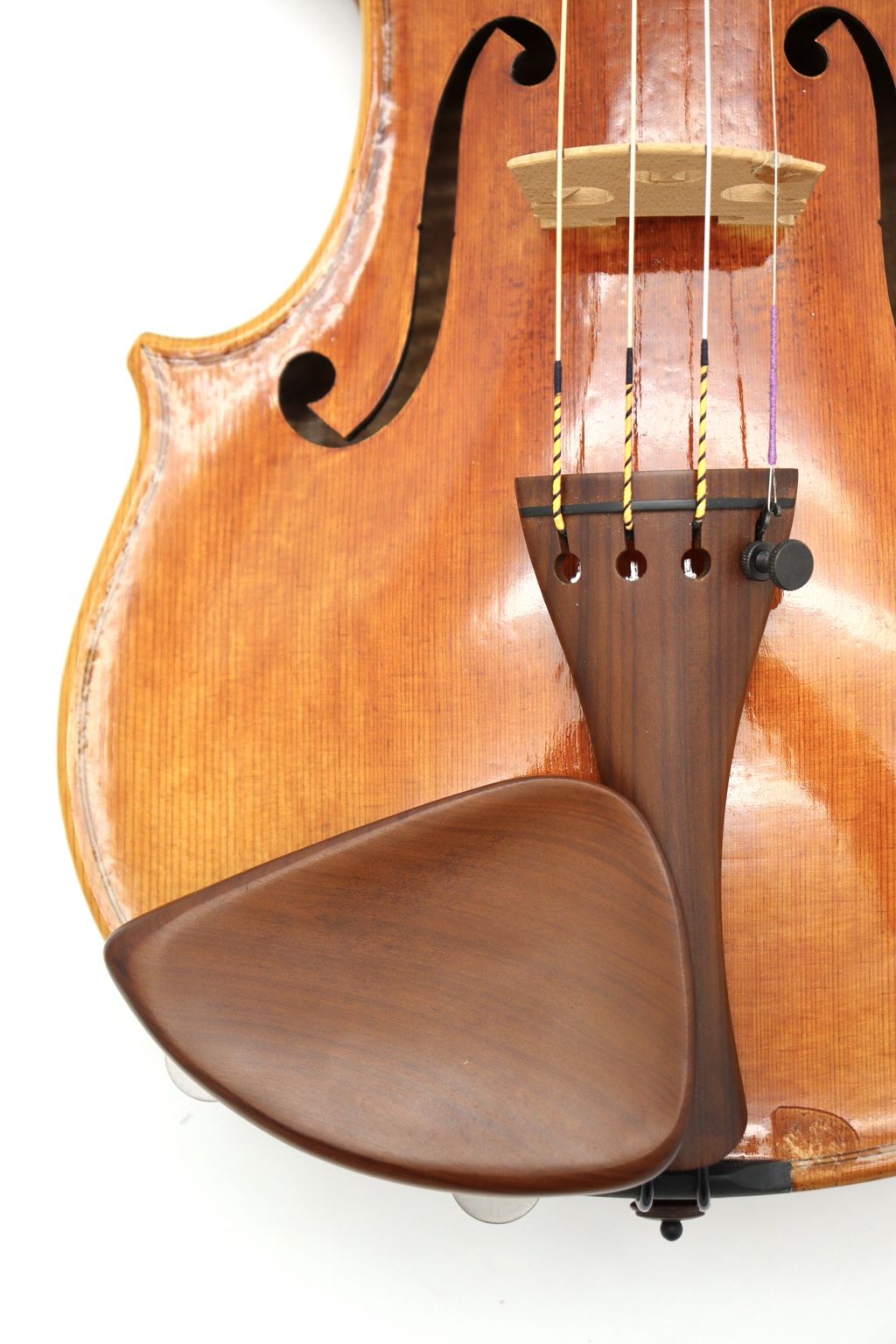
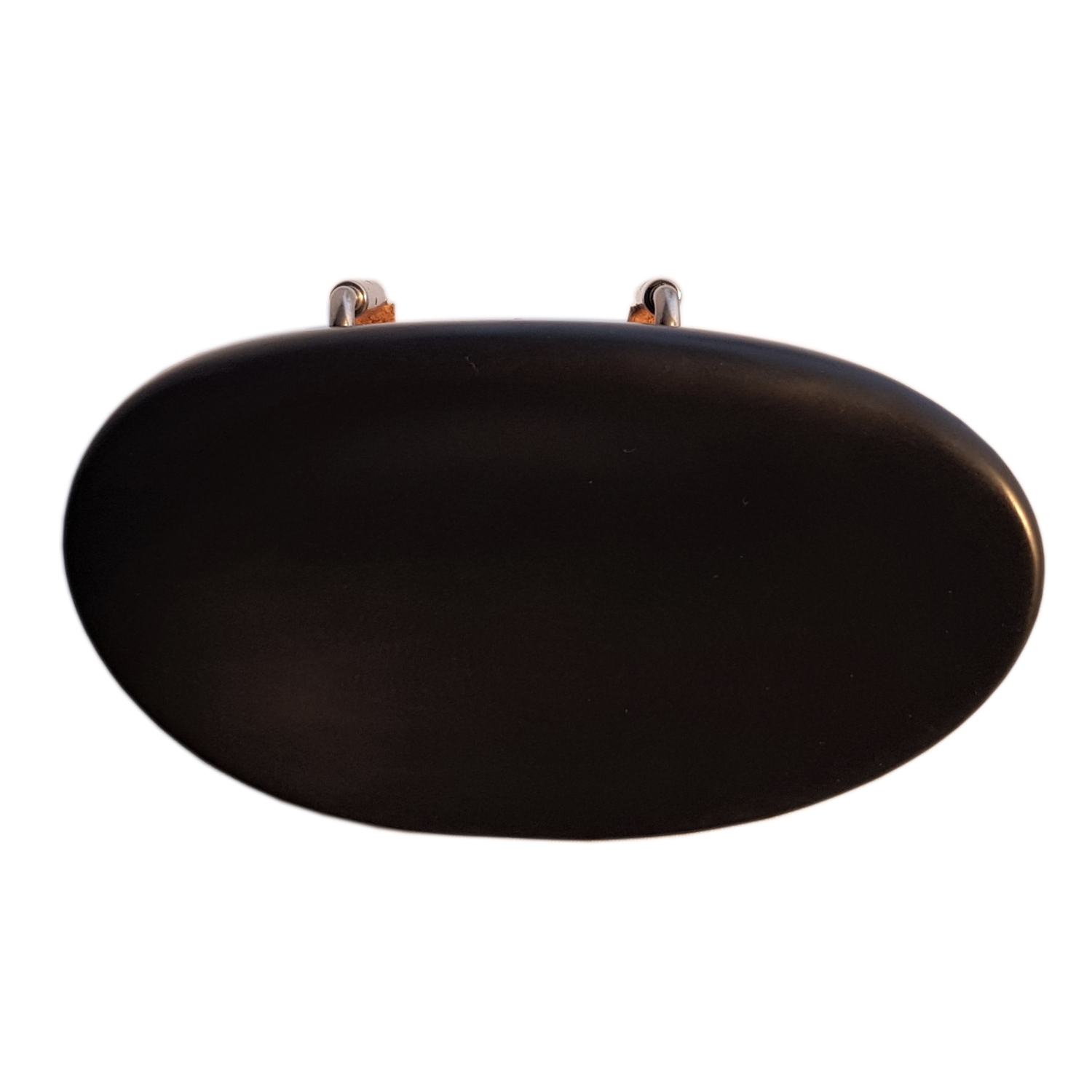
Chinrests positioned more centrally over the tailpiece can work well for musicians whose chin naturally rests closer to the centre of the instrument.
This position can support a relatively balanced and centred posture, provided that the player does not need to rotate the head too far to the left.
Side-Mounted Chinrests
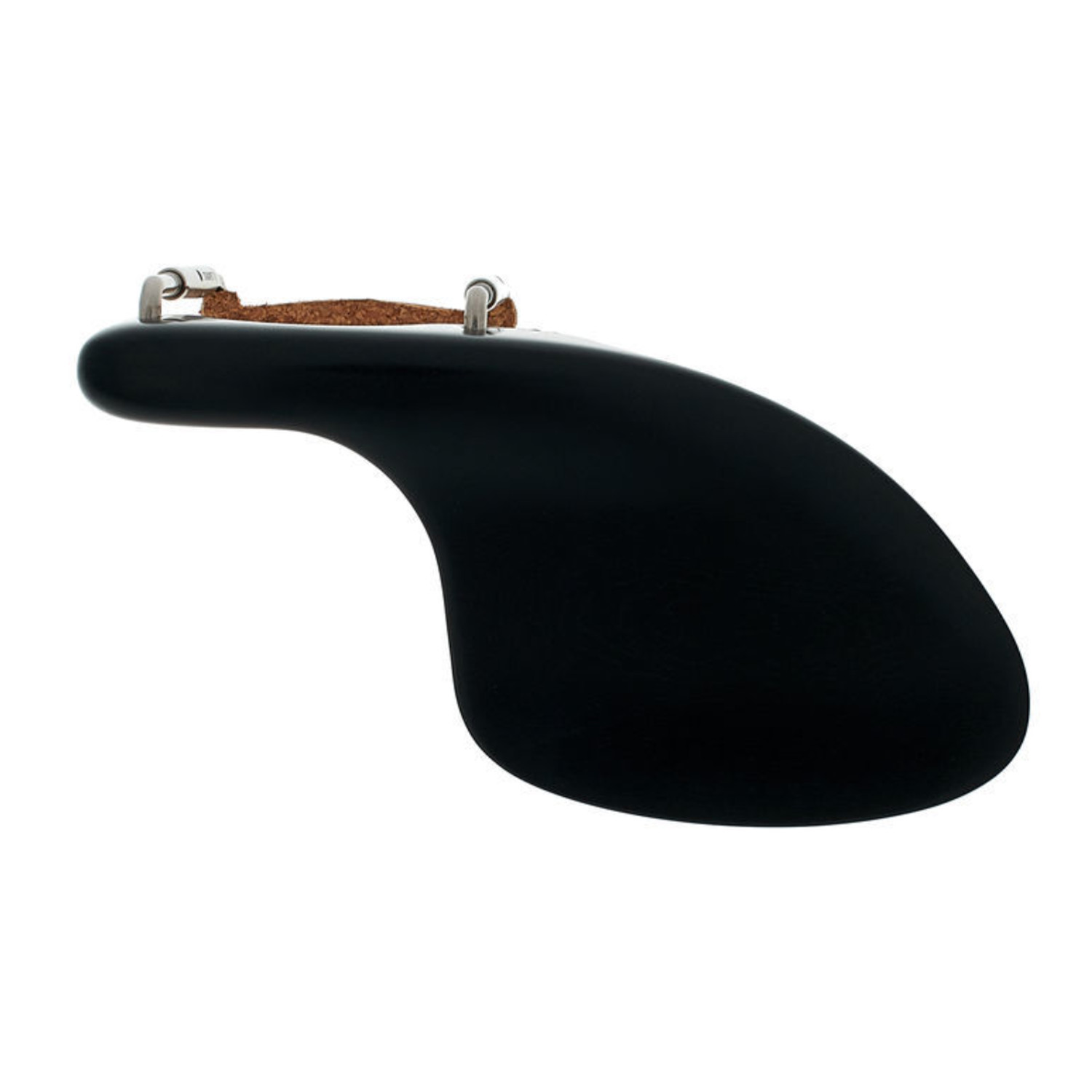
Side-mounted models are often suitable for players whose natural head position lies further to the left.
The key question is not which shape is generally considered the most ergonomic. What matters is where the player’s head naturally comes to rest without consciously searching for the correct position.
If the head has to remain strongly rotated to the left, this can become just as uncomfortable over time as a chinrest that is too low.
The Shape of the Chinrest Cup
The shape of the actual contact area is often underestimated.
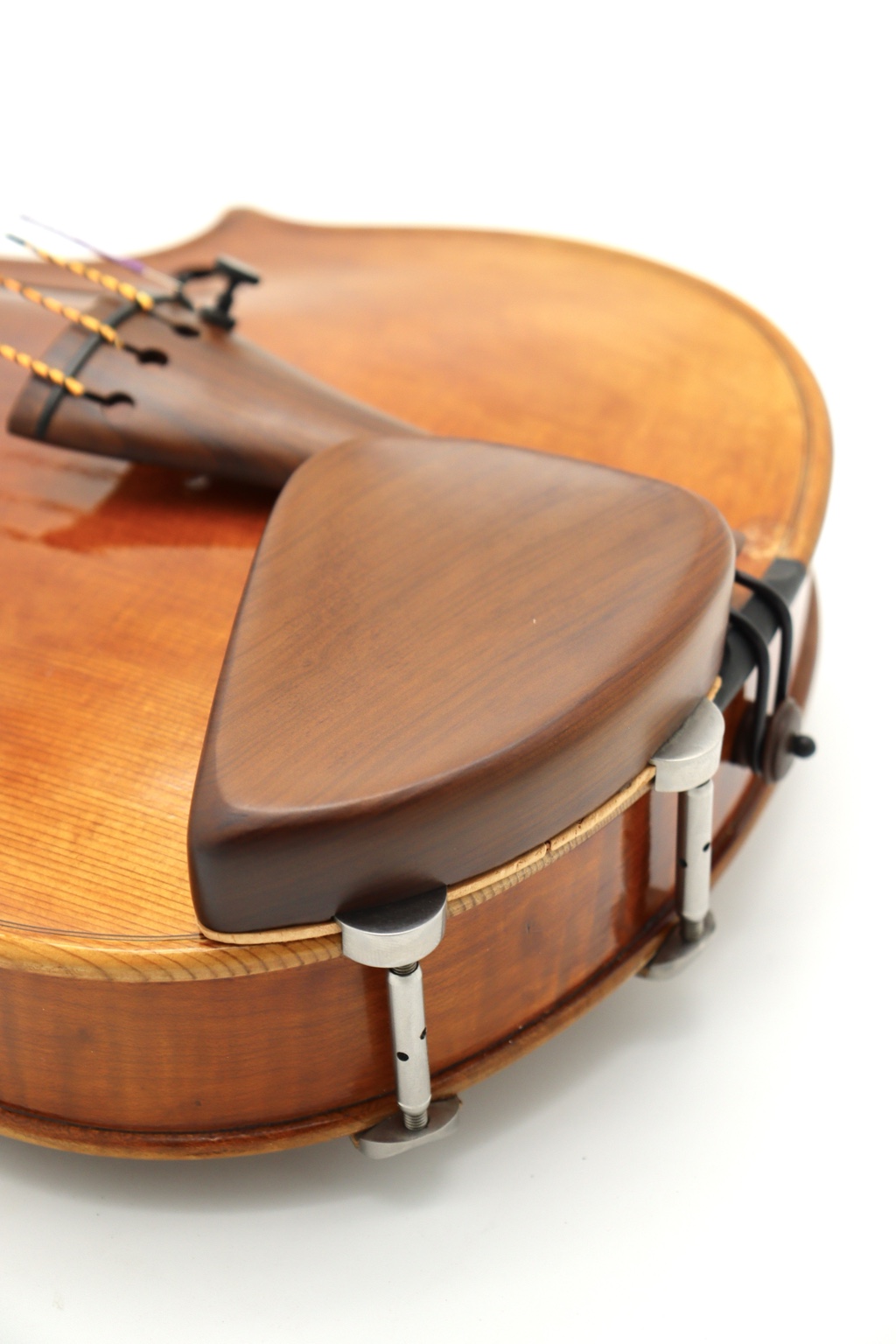
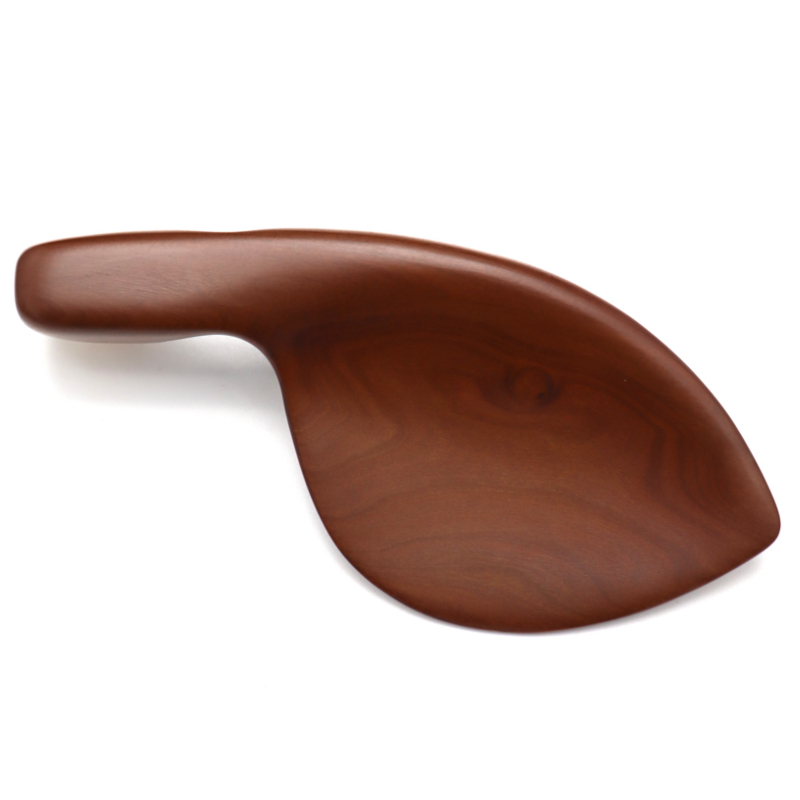
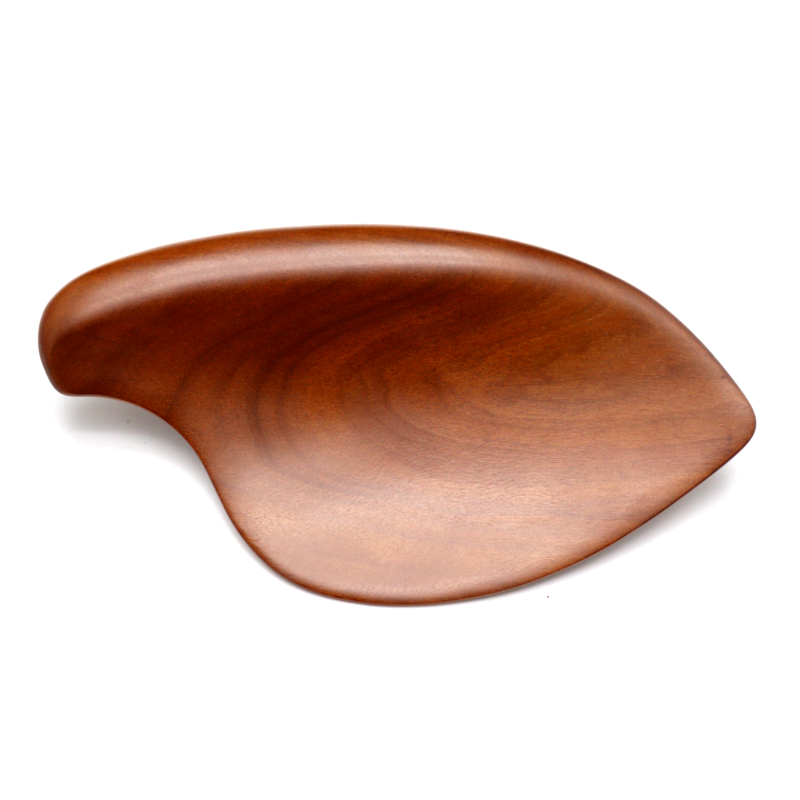
A very deep cup may initially feel secure, but it can also restrict natural movement and create concentrated pressure on certain jaw shapes.
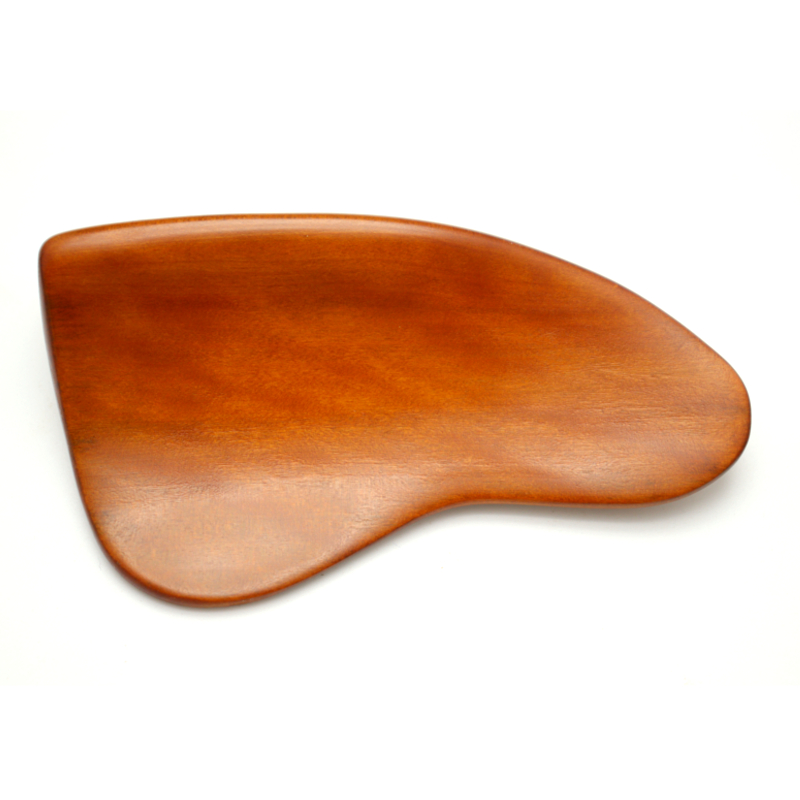
A broader and slightly flatter contact area often allows more freedom of movement.
The chinrest should support the jaw, not lock it into place.
The transitions and edges are especially important. They should be smoothly and precisely shaped without losing the clear character of the design.
Because the chinrest remains in direct contact with the musician for long periods, even a few millimetres can make a noticeable difference.
Chinrest and Shoulder Rest Must Work Together
When dealing with ergonomic problems, the chinrest should never be considered completely on its own.
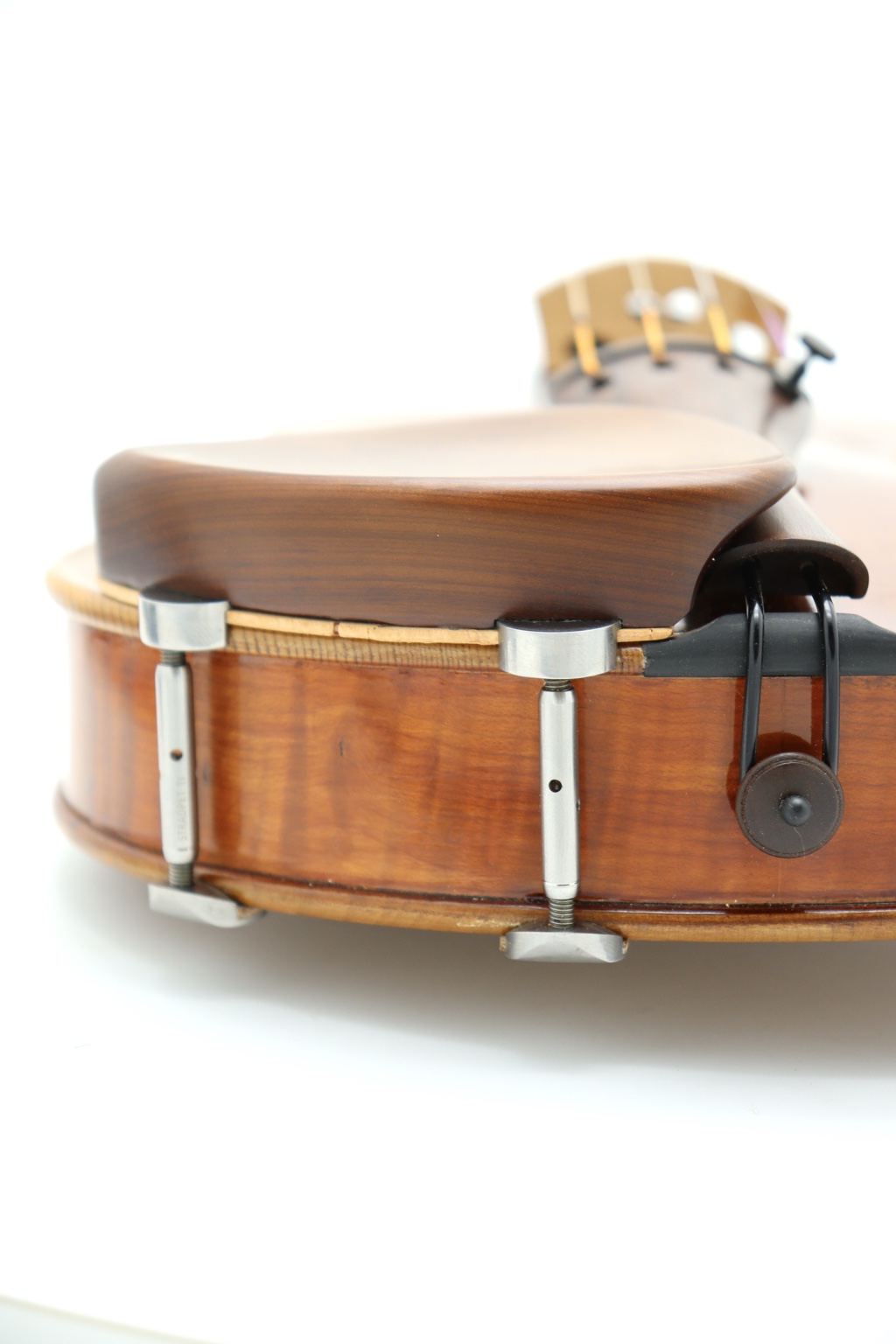
The chinrest and shoulder rest work together to create the connection between the musician and the instrument.
A higher chinrest may, for example, allow the shoulder rest to be set lower. This can give the shoulder more freedom and allow the instrument to sit closer to a natural playing position.
On the other hand, a high shoulder rest combined with a high chinrest can raise the instrument too far.
For this reason, the entire setup should always be considered as one system.
What Role Do Material and Craftsmanship Play?
In addition to shape, craftsmanship also plays an important role.
The chinrest is one of the few fittings on a violin or viola that remains in direct contact with the musician for long periods of time.
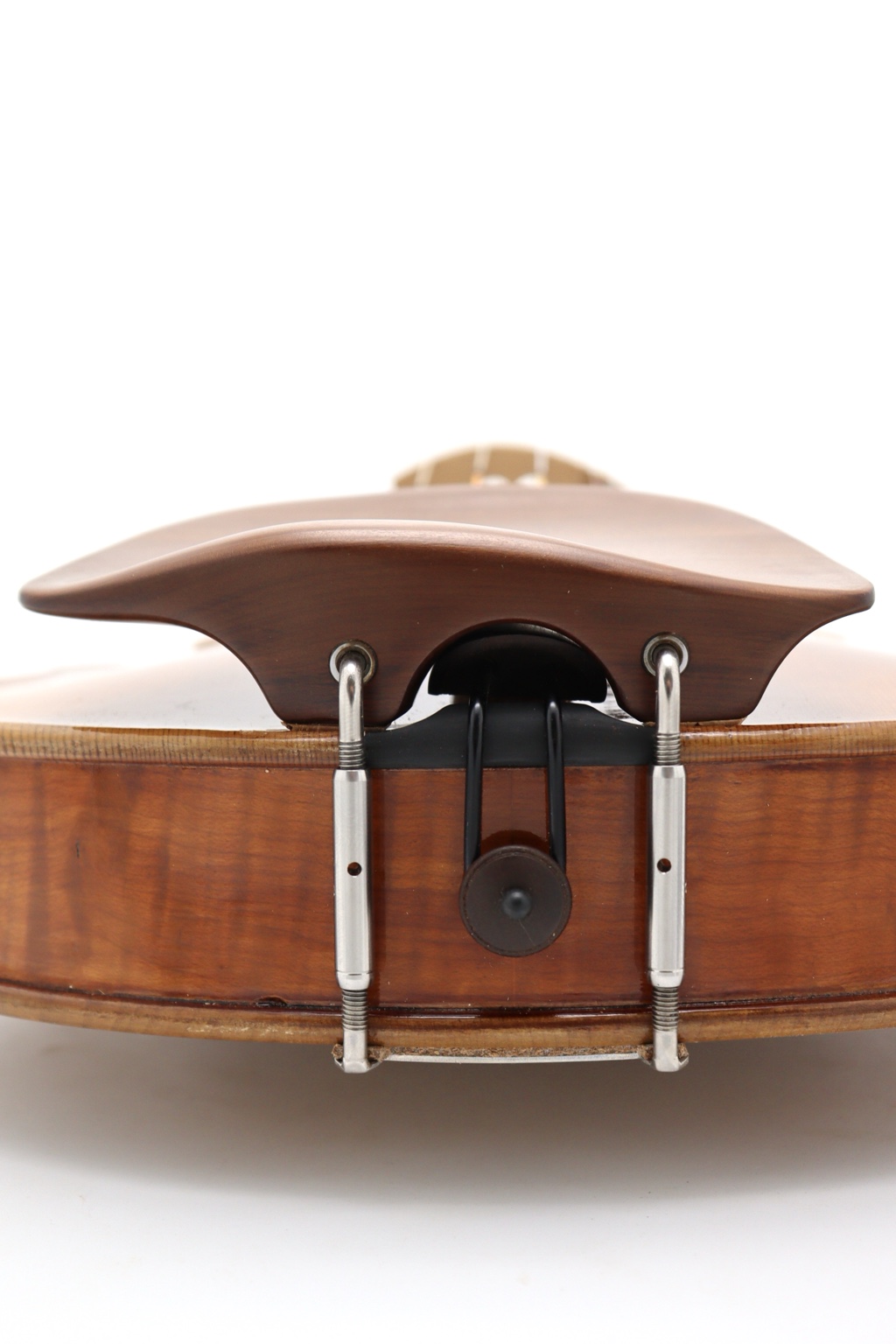
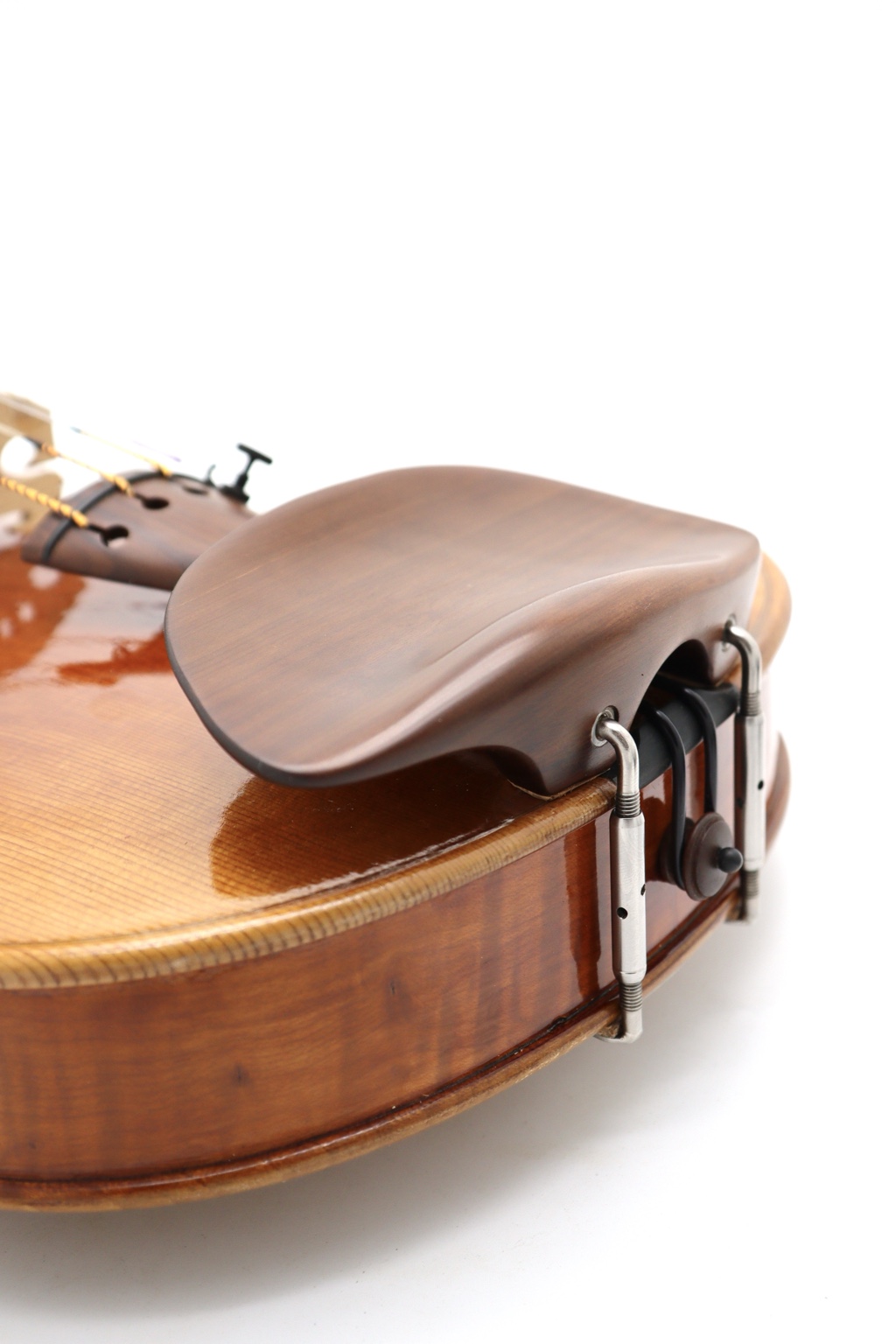
At Berdani, we therefore pay particular attention to precisely shaped surfaces, smoothly rounded transitions and carefully finished contact areas.
We make chinrests from a range of selected materials, including Boxwood, Dark Boxwood, English Boxwood and Ebony.
Boxwood and Dark Boxwood
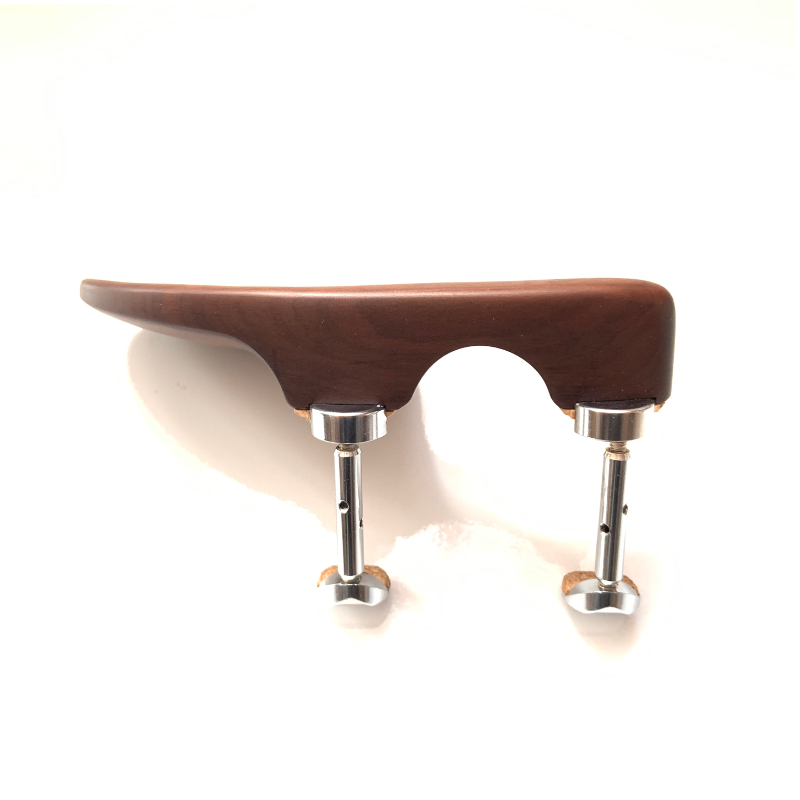
Our Boxwood and Dark Boxwood are made from Castello Boxwood – Calycophyllum multiflorum.
The different shades are created through controlled heat treatment. We do not use chemical stains, lyes or acids for this process.
After heat treatment, the wood is only oiled. Boxwood develops its characteristic medium-brown colour, while Dark Boxwood has a significantly darker appearance.
This natural treatment is especially important to us for a fitting that comes into direct contact with the skin.
Ebony
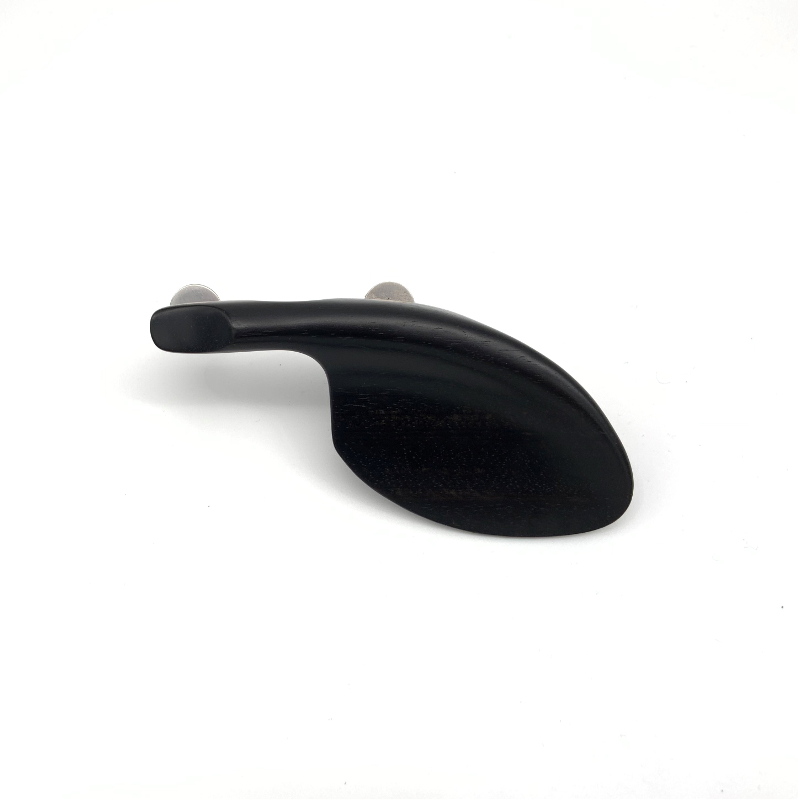
For our ebony chinrests, we use selected Central African ebony – Diospyros crassiflora.
The wood is carefully selected, finely sanded, treated with linseed oil and then polished.
Can a Chinrest Also Influence the Sound?
A chinrest is not only an ergonomic part of the instrument.
Through its weight, position and mounting system, it is directly connected to the body of the violin or viola.
Different models and different woods have different masses. This can influence the balance, response and overall playing feel of an instrument.
The extent of this influence varies from instrument to instrument.
For this reason, a high-quality chinrest should not be selected purely by appearance. Ergonomics, weight, material and the individual instrument should all be considered together.
How Do You Know Whether a Chinrest Fits Properly?
A well-adjusted chinrest should require as little conscious attention as possible while playing.
- The left shoulder remains relaxed and is not permanently raised.
- The head only needs to move slightly towards the instrument.
- The lower jaw rests on a sufficiently broad surface.
- No uncomfortable pressure points develop.
- The left hand can move freely.
- The instrument remains stable during position changes.
- The instrument does not need to be clamped between the chin and shoulder.
The best test therefore does not take place for just a few seconds in front of a mirror.
A chinrest should be tested during a longer practice session or rehearsal. Only then does it become clear whether the position still feels natural after 30, 60 or 90 minutes.
Small Adjustments Can Make a Big Difference
Neck discomfort does not always require a completely new setup.
A slightly different position, a different height or a small change in the shape of the contact area can sometimes make a significant difference.
Adjustments should therefore be made one at a time whenever possible.
If the chinrest, shoulder rest and overall playing posture are all changed at once, it becomes difficult to determine which adjustment actually helped.
This is where advice from an experienced violin maker can be particularly valuable. The focus should not only be on the chinrest itself, but on the overall relationship between instrument, head and shoulder.
The Right Chinrest Should Feel Natural
A good chinrest should not constantly draw attention to itself while playing.
It should create a secure connection between musician and instrument while still allowing enough freedom of movement for the head, neck, shoulder and left hand.
For us, this is one of the most important qualities of a good setup.
At Berdani, we combine traditional chinrest models with carefully selected materials and precise craftsmanship.
Because the right chinrest should not only suit the violin or viola. It should suit the musician as well.
Note: Persistent, severe or recurring neck pain should also be assessed by a doctor or physiotherapist.