Skip to main content Skip to search Skip to main navigation
Baroque Violin Tailpieces: Construction and Proper Fitting
Sound&Setup

Baroque Violin Tailpieces: Construction and Proper Fitting

3 Oct 2026 · Daniel Hiller – Master Violin Maker and Founder of Berdani

Daniel Hiller – Master Violin Maker and Founder of Berdani

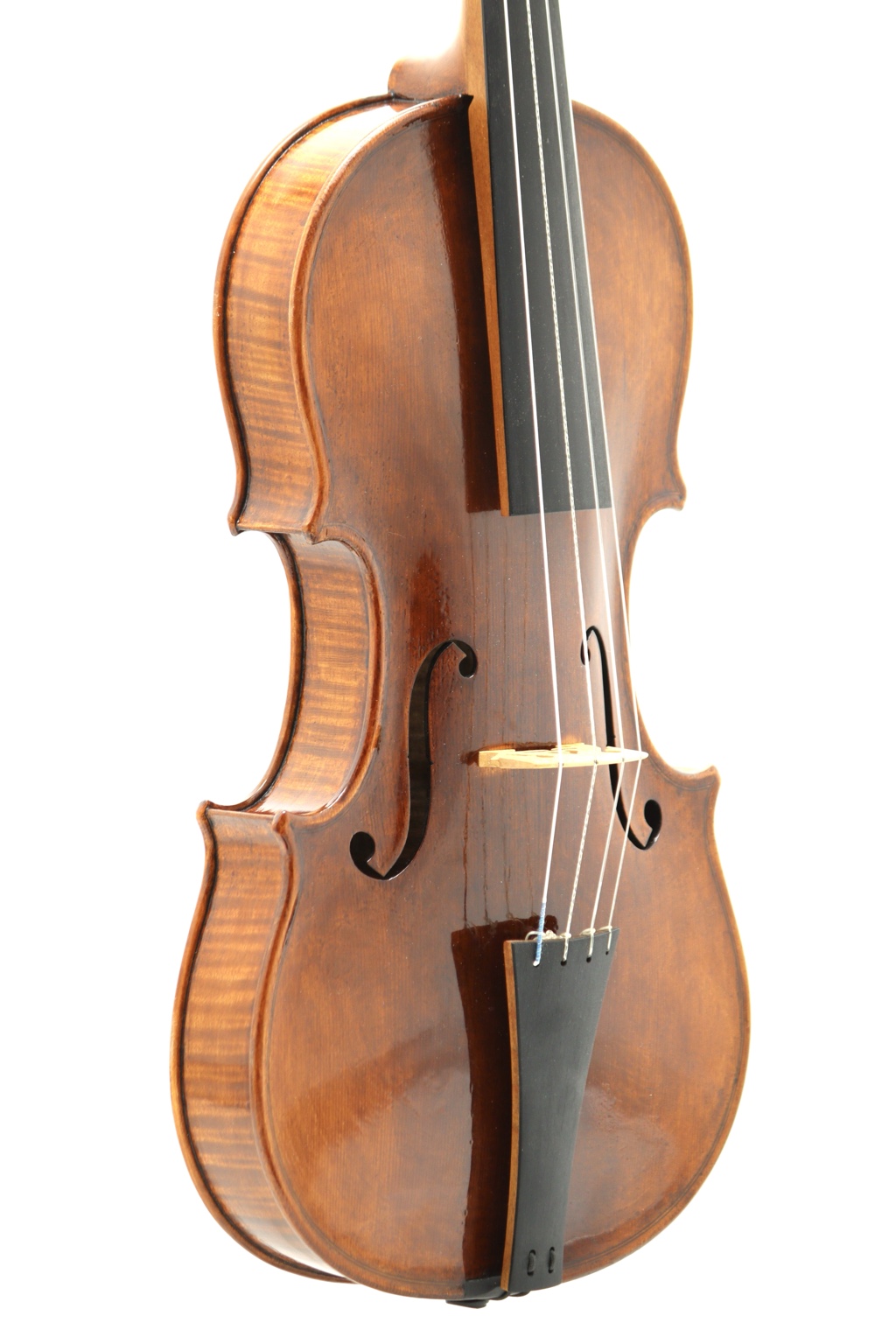
A Baroque violin tailpiece is defined by more than its historical shape. Its construction, low weight and the careful finishing of every surface in contact with the gut strings are essential. A well-made historical tailpiece combines a lightweight structure with strength and stability.

A typical construction uses a maple core with a veneer glued onto its upper surface. This combination is central to the historical design. Equally important are the direct attachment of the gut strings through the string holes, a rounded front edge and cleanly deburred holes.

Maple core and veneer: lightweight and strong

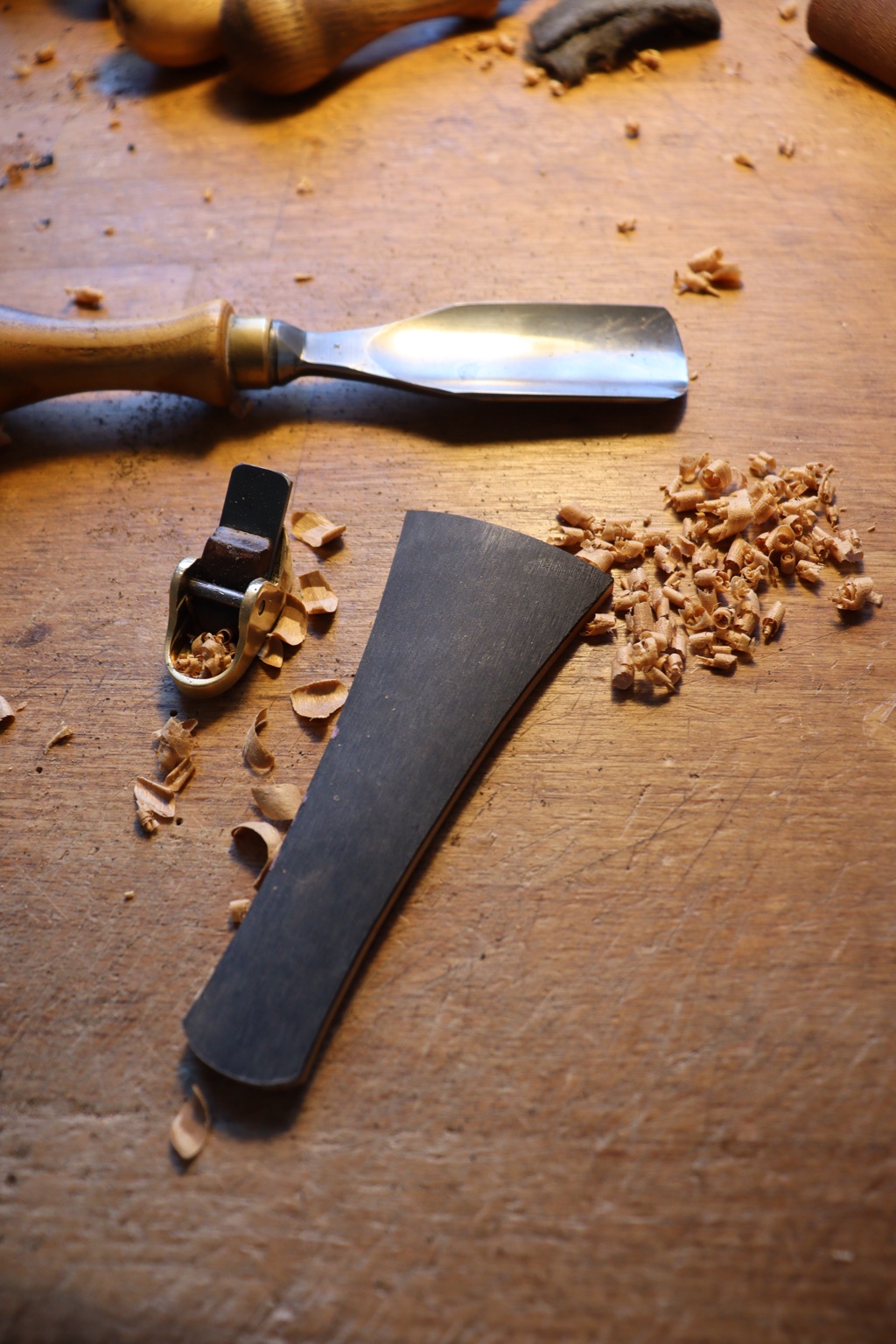
Maple is commonly used for the core of a historical tailpiece, with a veneer glued onto it. This creates a lightweight yet strong structure with a surface suited to the intended historical appearance.

This construction differs from a tailpiece carved entirely from a solid, heavy wood. In a veneered model, the core and surface layer must be considered together. Material thickness, grain direction, shaping and a carefully executed glue joint determine the quality of the finished component.

The aim is a lightweight tailpiece that can reliably withstand the load. The core must therefore be neither unnecessarily thick nor excessively thin. Sufficient material must remain around the holes in particular. The edges of the veneer must also be neatly finished and firmly bonded to the core.

The visible surface alone therefore reveals little about the overall construction. A dark historical tailpiece does not necessarily consist entirely of dark wood. Beneath the veneer, there may be a lightweight maple core.

Gut strings attach directly through the holes

In the historical construction described here, the gut strings attach directly through the designated holes in the tailpiece. Each attachment must suit the string and hold it securely. Tuning is carried out using the pegs.

Modern fine tuners are not part of this design. Direct gut-string attachment is integral to the construction and function of the historical tailpiece.

Properly fitted pegs are therefore an important part of the complete setup. They must turn smoothly and predictably while securely maintaining the chosen string tension.

Why the front edge must be rounded

One essential detail is the front edge of the tailpiece, facing the bridge. This edge must be carefully rounded to prevent damage to the gut strings.

A sharp edge can damage a tensioned string at its point of contact. A smoothly rounded edge allows the string to pass over it without encountering a cutting surface.

It is not enough for the edge simply to look smooth. What matters is the actual contact surface beneath the string. There must be no sharp transitions, small irregularities or protruding veneer fibres.

These subtle details reveal the craftsmanship of a historical tailpiece. They are just as important to reliable use as an attractive silhouette.

Every hole must be cleanly deburred

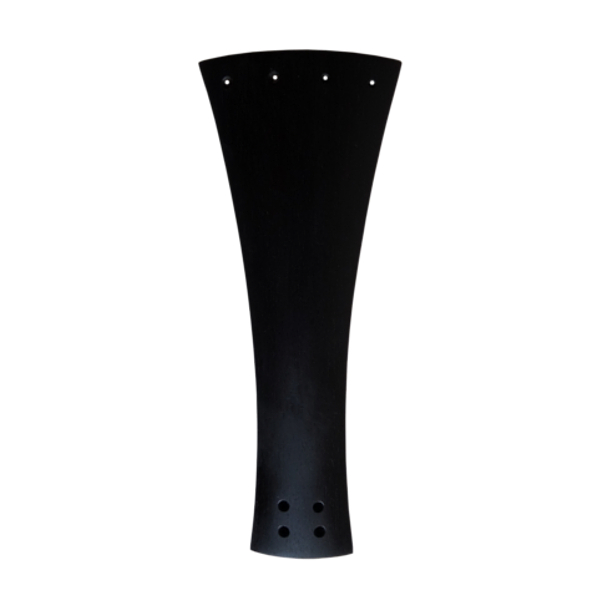
Alongside the front edge, every drilled hole requires particular attention. All holes must be cleanly deburred on both the upper and lower surfaces. This applies to the string holes as well as the holes for the gut tailcord.

Drilling can leave small wood fibres, splinters or sharp edges around the openings. These must be carefully removed. Clean finishing is particularly important where the veneer meets the maple core.

The openings must guide and support the strings without cutting or abrading them. Deburring does not mean enlarging the holes indiscriminately. Their intended shape and sufficient surrounding material must be preserved.

Two or four holes for the gut tailcord

The gut tailcord connects the tailpiece to the violin’s end button. Its routing must suit the tailpiece construction and the intended setup.

At Berdani, we can drill either two or four holes for the gut tailcord. The choice depends on the customer’s preference and the planned method of threading the tailcord.

These holes are separate from the four string holes at the front of the tailpiece. The desired tailcord arrangement should therefore be specified when ordering.

For both options, we pay close attention to accurate positioning and cleanly deburred edges. The gut tailcord must not pass over sharp edges at any point of contact.

Shape and proportions suited to the historical reference

Historical tailpieces vary in shape and construction according to period, region and reference instrument. There is no single Baroque design that suits every violin. A specific historical reference is therefore particularly helpful when making a historical copy.

The length and width of the tailpiece should harmonise with the proportions of the instrument. At the same time, they must allow suitable string alignment and positioning. Appearance and technical function are considered together.

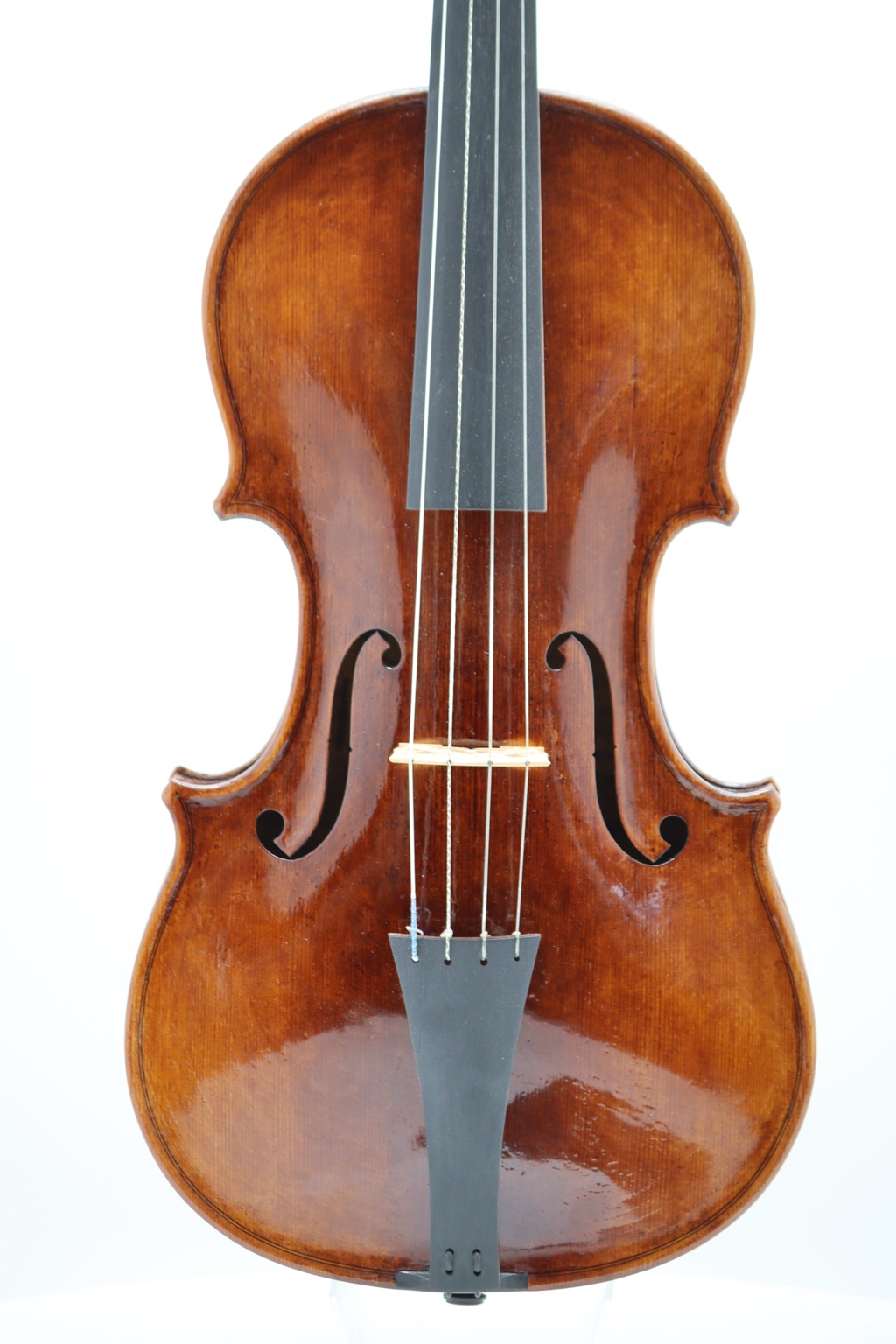
A coherent historical setup also includes the fingerboard, bridge, pegs and strings. The tailpiece is one part of this arrangement and should always be selected with the complete instrument in mind.

Understanding tailpiece length and afterlength

Tailpiece length should not be confused with playing length. The playing length is the freely vibrating string length between the nut and the bridge. The afterlength is the vibrating section behind the bridge, extending to its effective termination at the tailpiece.

With the bridge position unchanged, a different tailpiece does not directly alter the playing length. Its length and position do, however, influence the available afterlength.

With a historical tailpiece, it is important to examine how the string passes over the rounded front edge and into its attachment. The actual contact points matter more than a measurement based solely on the outer dimensions.

A standard measurement therefore cannot replace assessment on the instrument. The tailpiece, gut tailcord and strings must be adjusted together to suit the existing setup.

Low weight and tonal adjustment

The lightweight combination of maple core and veneer is a defining feature of the historical tailpiece. Through the strings and gut tailcord, it forms part of the violin’s vibrating system. Its weight, shaping and position can influence response and tonal balance.

The result can only be assessed on the instrument itself. String choice, afterlength and tailcord arrangement also play a role. A particular construction alone therefore cannot guarantee a specific tonal outcome.

We explore these relationships further in our article Which tailpiece improves a violin’s sound?

What we focus on at Berdani

When making a historical tailpiece, we focus on lightweight, stable construction and careful workmanship. This includes shaping the maple core, bonding the veneer and, especially, finishing the surfaces that come into contact with the gut strings.

  • Maple core with veneer: a lightweight and strong construction.
  • Rounded front edge: a smooth contact surface for the gut strings.
  • Cleanly deburred holes: no sharp edges or protruding wood fibres.
  • Two or four holes for the gut tailcord: according to customer preference and the intended routing.
  • Suitable proportions: matched to the instrument and historical reference.

For an enquiry, photographs of the instrument, the desired tailpiece length and details of the historical reference are helpful. Please also let us know whether you would like two or four holes for the gut tailcord.
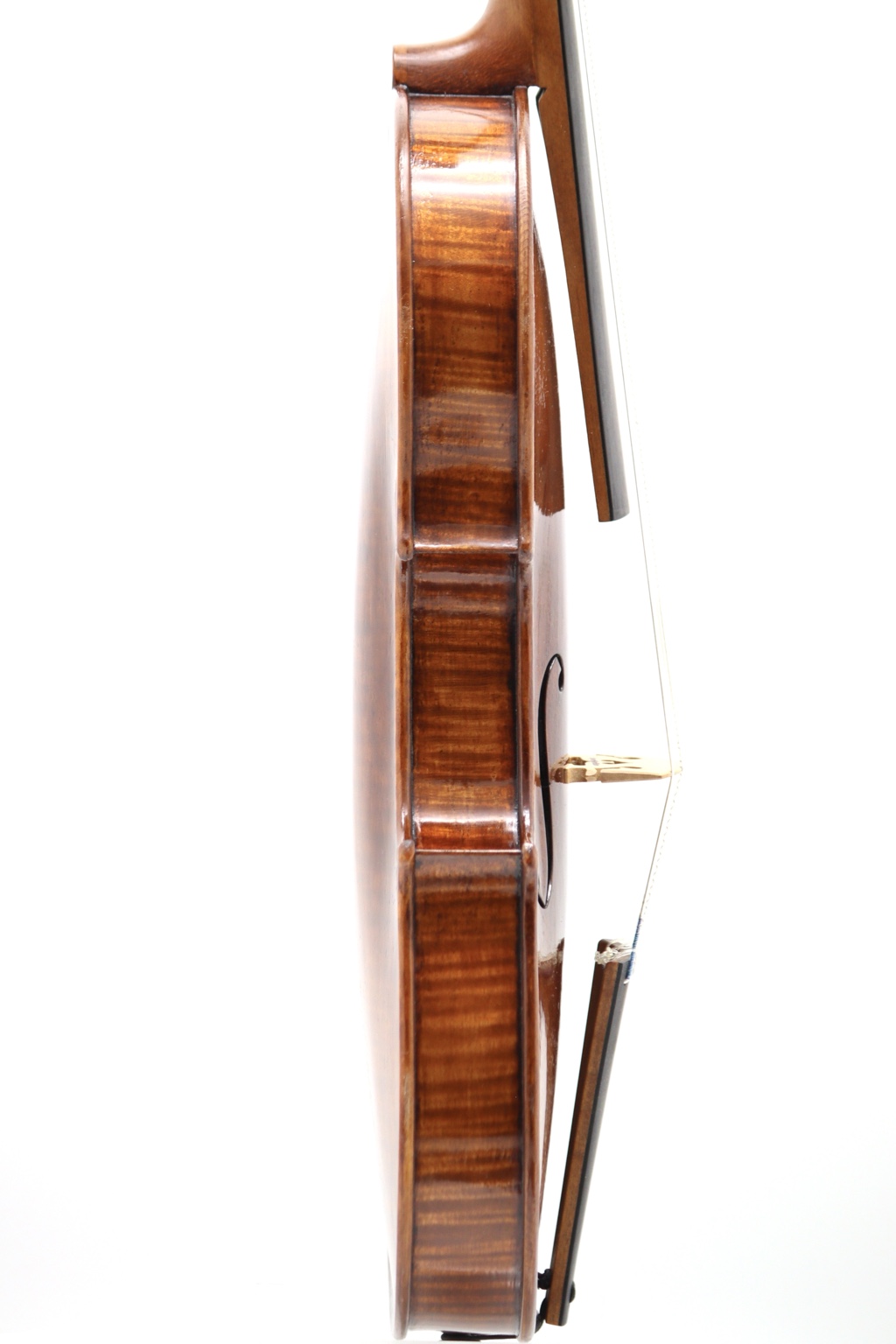
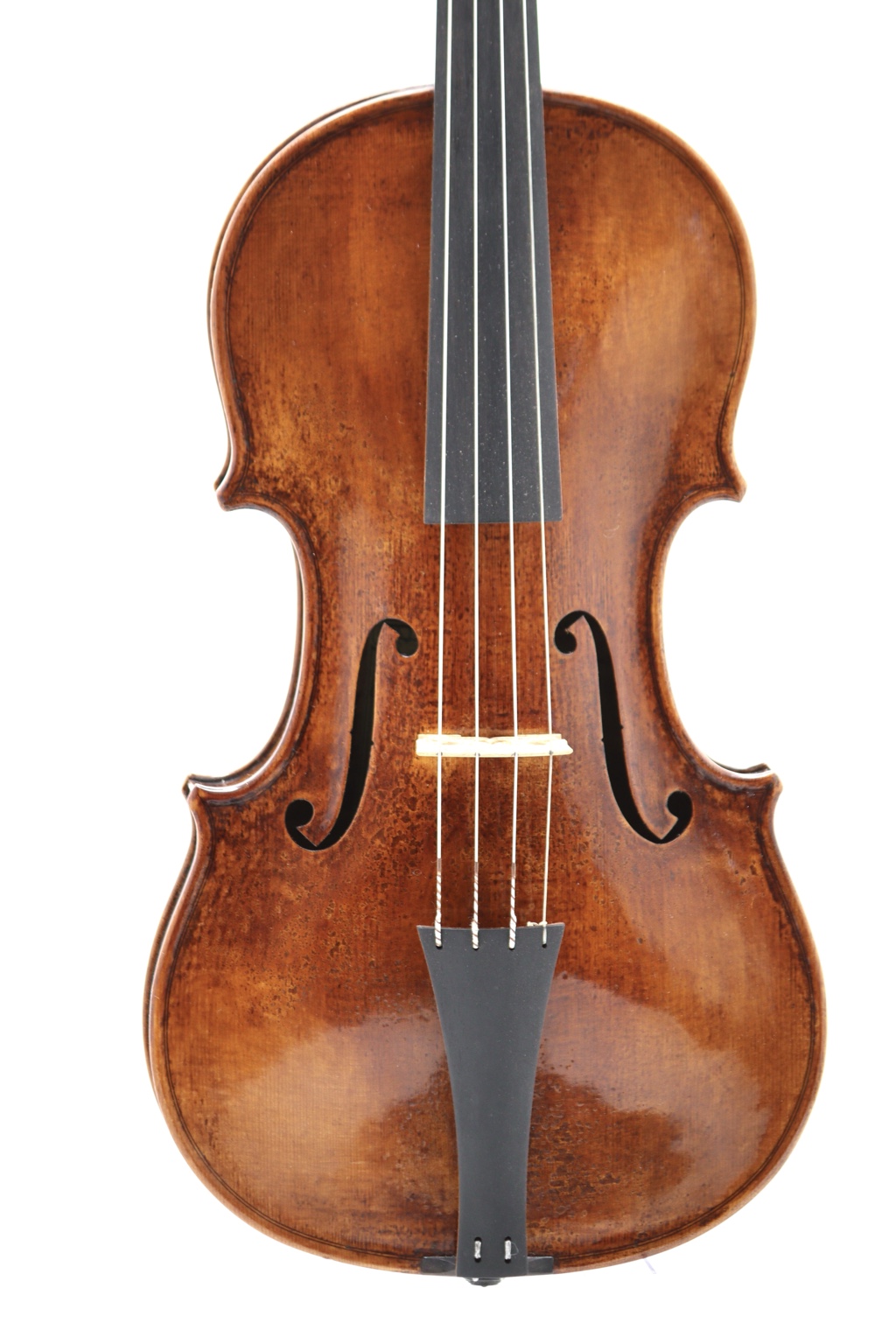
Contact Berdani to discuss your historical tailpiece.

Matching products

historical tailpiece vioin
Violin Tailpiece baroque model

Violin Tailpiece baroque model   BERDANI develops historical tailpieces that are precisely handcrafted to match your instrument. All Berdani products are built entirely in Germany. We offer different models and different lengths to achieve the best possible sound.   Our idea for an optimal sound: The weighting of the tailpiece is chosen so that the vibrations of the instrument are supported and not hindered. The tailpiece is inside hollowed out The angles of the strings from the bridge to the tailpiece do not taper, but run straight down and parallel to each other. The result is a harmonious and balanced sound. The maple tailpiece is glued and locked with ebony or dark paperfunier. It is therefore very stable. The tailpiece comes with a gut and braided string. You decide which sound you like best   The versions   Models: Baroque Model Sizes: short tailpiece 107x44mm, slot width 32mm standard tailpiece 110x44mm, slot width 32mm Wood species: Maple with ebony veneer Maple with Dark Paperfunier Surface: Finely ground and polished with pure linseed oil skin-friendly and natural surface Berdani´s Dark Paper  Sustainable, Environmentally Friendly and Innovative - An Alternative for Ebony   Our idea: We wanted to find a material that is equal to ebony in appearance, weight and sound, but can be produced sustainably. We succeeded in doing that. The result is Berdani's Dark Paper, a composite of recycled paper and resin.   Production To produce the high-quality dark paper, recycled paper is soaked with a warm resin, layered by hand and pressed under high pressure.   Appearance The finished product looks like the finest ebony. It has a continuous black colour and the same hardness and density as ebony. Berdani's Dark Paper is also heat and dirt repellent and resistant to moisture and sweat. Since the material is made of purely natural components, it is 100% biodegradable. Berdani`s Dark Paper is also non-toxic and does not shrink or swell.   Processing / Use The composite material can be processed immediately and without long storage times. Violin makers do not need special tools for this. The material can be processed with conventional violin making tools; it can be planed, filed and sanded.   Swiss maple The maple was felled and split by ourselves. The woods have been stored for years and are sorted by weight and sound. It is finely sanded with linseed oil and polished with Canauba wax.   Ebony The ebony has been carefully stored for years and is sorted by weight and sound. It is finely sanded with linseed oil and polished with Canauba wax.  

Regular price: From €200.00
historical tailpiece vioin
Violin Tailpiece baroque model

Violin Tailpiece baroque model   BERDANI develops historical tailpieces that are precisely handcrafted to match your instrument. All Berdani products are built entirely in Germany. We offer different models and different lengths to achieve the best possible sound.   Our idea for an optimal sound: The weighting of the tailpiece is chosen so that the vibrations of the instrument are supported and not hindered. The tailpiece is inside hollowed out The angles of the strings from the bridge to the tailpiece do not taper, but run straight down and parallel to each other. The result is a harmonious and balanced sound. The maple tailpiece is glued and locked with ebony or dark paperfunier. It is therefore very stable. The tailpiece comes with a gut and braided string. You decide which sound you like best   The versions   Models: Baroque Model Sizes: short tailpiece 107x44mm, slot width 32mm standard tailpiece 110x44mm, slot width 32mm Wood species: Maple with ebony veneer Maple with Dark Paperfunier Surface: Finely ground and polished with pure linseed oil skin-friendly and natural surface Berdani´s Dark Paper  Sustainable, Environmentally Friendly and Innovative - An Alternative for Ebony   Our idea: We wanted to find a material that is equal to ebony in appearance, weight and sound, but can be produced sustainably. We succeeded in doing that. The result is Berdani's Dark Paper, a composite of recycled paper and resin.   Production To produce the high-quality dark paper, recycled paper is soaked with a warm resin, layered by hand and pressed under high pressure.   Appearance The finished product looks like the finest ebony. It has a continuous black colour and the same hardness and density as ebony. Berdani's Dark Paper is also heat and dirt repellent and resistant to moisture and sweat. Since the material is made of purely natural components, it is 100% biodegradable. Berdani`s Dark Paper is also non-toxic and does not shrink or swell.   Processing / Use The composite material can be processed immediately and without long storage times. Violin makers do not need special tools for this. The material can be processed with conventional violin making tools; it can be planed, filed and sanded.   Swiss maple The maple was felled and split by ourselves. The woods have been stored for years and are sorted by weight and sound. It is finely sanded with linseed oil and polished with Canauba wax.   Ebony The ebony has been carefully stored for years and is sorted by weight and sound. It is finely sanded with linseed oil and polished with Canauba wax.  

Regular price: €200.00
historical tailpiece vioin
Violin Tailpiece baroque model

Violin Tailpiece baroque model   BERDANI develops historical tailpieces that are precisely handcrafted to match your instrument. All Berdani products are built entirely in Germany. We offer different models and different lengths to achieve the best possible sound.   Our idea for an optimal sound: The weighting of the tailpiece is chosen so that the vibrations of the instrument are supported and not hindered. The tailpiece is inside hollowed out The angles of the strings from the bridge to the tailpiece do not taper, but run straight down and parallel to each other. The result is a harmonious and balanced sound. The maple tailpiece is glued and locked with ebony or dark paperfunier. It is therefore very stable. The tailpiece comes with a gut and braided string. You decide which sound you like best   The versions   Models: Baroque Model Sizes: short tailpiece 107x44mm, slot width 32mm standard tailpiece 110x44mm, slot width 32mm Wood species: Maple with ebony veneer Maple with Dark Paperfunier Surface: Finely ground and polished with pure linseed oil skin-friendly and natural surface Berdani´s Dark Paper  Sustainable, Environmentally Friendly and Innovative - An Alternative for Ebony   Our idea: We wanted to find a material that is equal to ebony in appearance, weight and sound, but can be produced sustainably. We succeeded in doing that. The result is Berdani's Dark Paper, a composite of recycled paper and resin.   Production To produce the high-quality dark paper, recycled paper is soaked with a warm resin, layered by hand and pressed under high pressure.   Appearance The finished product looks like the finest ebony. It has a continuous black colour and the same hardness and density as ebony. Berdani's Dark Paper is also heat and dirt repellent and resistant to moisture and sweat. Since the material is made of purely natural components, it is 100% biodegradable. Berdani`s Dark Paper is also non-toxic and does not shrink or swell.   Processing / Use The composite material can be processed immediately and without long storage times. Violin makers do not need special tools for this. The material can be processed with conventional violin making tools; it can be planed, filed and sanded.   Swiss maple The maple was felled and split by ourselves. The woods have been stored for years and are sorted by weight and sound. It is finely sanded with linseed oil and polished with Canauba wax.   Ebony The ebony has been carefully stored for years and is sorted by weight and sound. It is finely sanded with linseed oil and polished with Canauba wax.  

Variants from €200.00
Regular price: €242.00
historical tailpiece vioin
Violin Tailpiece baroque model

Violin Tailpiece baroque model   BERDANI develops historical tailpieces that are precisely handcrafted to match your instrument. All Berdani products are built entirely in Germany. We offer different models and different lengths to achieve the best possible sound.   Our idea for an optimal sound: The weighting of the tailpiece is chosen so that the vibrations of the instrument are supported and not hindered. The tailpiece is inside hollowed out The angles of the strings from the bridge to the tailpiece do not taper, but run straight down and parallel to each other. The result is a harmonious and balanced sound. The maple tailpiece is glued and locked with ebony or dark paperfunier. It is therefore very stable. The tailpiece comes with a gut and braided string. You decide which sound you like best   The versions   Models: Baroque Model Sizes: short tailpiece 107x44mm, slot width 32mm standard tailpiece 110x44mm, slot width 32mm Wood species: Maple with ebony veneer Maple with Dark Paperfunier Surface: Finely ground and polished with pure linseed oil skin-friendly and natural surface Berdani´s Dark Paper  Sustainable, Environmentally Friendly and Innovative - An Alternative for Ebony   Our idea: We wanted to find a material that is equal to ebony in appearance, weight and sound, but can be produced sustainably. We succeeded in doing that. The result is Berdani's Dark Paper, a composite of recycled paper and resin.   Production To produce the high-quality dark paper, recycled paper is soaked with a warm resin, layered by hand and pressed under high pressure.   Appearance The finished product looks like the finest ebony. It has a continuous black colour and the same hardness and density as ebony. Berdani's Dark Paper is also heat and dirt repellent and resistant to moisture and sweat. Since the material is made of purely natural components, it is 100% biodegradable. Berdani`s Dark Paper is also non-toxic and does not shrink or swell.   Processing / Use The composite material can be processed immediately and without long storage times. Violin makers do not need special tools for this. The material can be processed with conventional violin making tools; it can be planed, filed and sanded.   Swiss maple The maple was felled and split by ourselves. The woods have been stored for years and are sorted by weight and sound. It is finely sanded with linseed oil and polished with Canauba wax.   Ebony The ebony has been carefully stored for years and is sorted by weight and sound. It is finely sanded with linseed oil and polished with Canauba wax.  

Variants from €200.00
Regular price: €220.00
historical tailpiece vioin
Violin Tailpiece baroque model

Violin Tailpiece baroque model   BERDANI develops historical tailpieces that are precisely handcrafted to match your instrument. All Berdani products are built entirely in Germany. We offer different models and different lengths to achieve the best possible sound.   Our idea for an optimal sound: The weighting of the tailpiece is chosen so that the vibrations of the instrument are supported and not hindered. The tailpiece is inside hollowed out The angles of the strings from the bridge to the tailpiece do not taper, but run straight down and parallel to each other. The result is a harmonious and balanced sound. The maple tailpiece is glued and locked with ebony or dark paperfunier. It is therefore very stable. The tailpiece comes with a gut and braided string. You decide which sound you like best   The versions   Models: Baroque Model Sizes: short tailpiece 107x44mm, slot width 32mm standard tailpiece 110x44mm, slot width 32mm Wood species: Maple with ebony veneer Maple with Dark Paperfunier Surface: Finely ground and polished with pure linseed oil skin-friendly and natural surface Berdani´s Dark Paper  Sustainable, Environmentally Friendly and Innovative - An Alternative for Ebony   Our idea: We wanted to find a material that is equal to ebony in appearance, weight and sound, but can be produced sustainably. We succeeded in doing that. The result is Berdani's Dark Paper, a composite of recycled paper and resin.   Production To produce the high-quality dark paper, recycled paper is soaked with a warm resin, layered by hand and pressed under high pressure.   Appearance The finished product looks like the finest ebony. It has a continuous black colour and the same hardness and density as ebony. Berdani's Dark Paper is also heat and dirt repellent and resistant to moisture and sweat. Since the material is made of purely natural components, it is 100% biodegradable. Berdani`s Dark Paper is also non-toxic and does not shrink or swell.   Processing / Use The composite material can be processed immediately and without long storage times. Violin makers do not need special tools for this. The material can be processed with conventional violin making tools; it can be planed, filed and sanded.   Swiss maple The maple was felled and split by ourselves. The woods have been stored for years and are sorted by weight and sound. It is finely sanded with linseed oil and polished with Canauba wax.   Ebony The ebony has been carefully stored for years and is sorted by weight and sound. It is finely sanded with linseed oil and polished with Canauba wax.  

Variants from €200.00
Regular price: €242.00

← Back to overview